Showing posts with label tide mill. Show all posts

Tide Mill Institute 2015 conference

Thursday, November 5, 2015

The Tide Mill Institute will hold its 11th annual conference on November 6-7, 2015, at the Cummings Center in Beverly, Massachusetts.  Participants will explore the past, present, and future uses of tidal energy through expert presentations, exhibits, and a field trip to a mid-seventeenth century tide mill site.

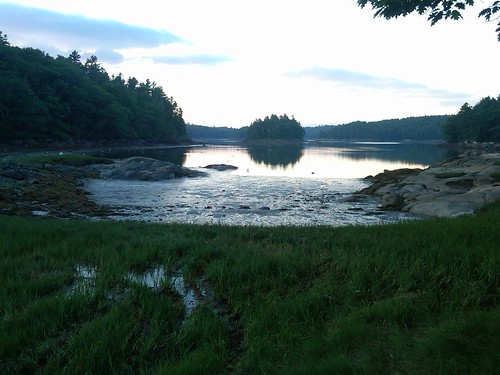
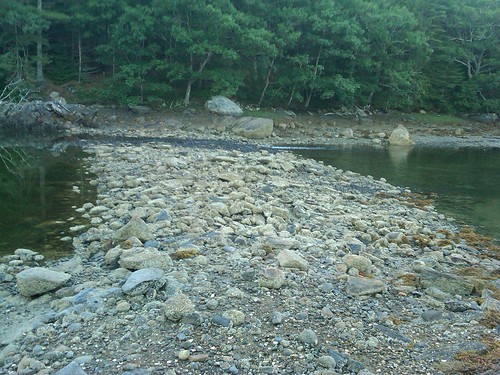
Part of the tidal barrage at the site of Heal's Lower Mill, Westport Island, Maine.


A nonprofit corporation, the Tide Mill Institute hopes to advance the appreciation of tide mill history and technology by encouraging research, by promoting appropriate re-uses of former tide mill sites and by fostering communication among tide mill enthusiasts.  The Institute's mission is:

  • to advance appreciation of the American and international heritage of tide mill technology;
  • to encourage research into the location and history of tide mill sites;
  • to serve as a repository for tide mill data for students, scholars, engineers and the general public and to support and expand the community of these tide mill stakeholders; and
  • to promote appropriate re-uses of old tide-mill sites and the development of the use of tides as an energy source.

Tide Mill Institute's 2015 symposium includes presentations on tide mills and tidal power by experts from France, Ireland, and the U.S.  Thomas McErlean will describe his experiences uncovering a nearly 1,400 year old tide mill at Nendrum, Northern Ireland, whose bed logs were cut in 619 AD.  The conference includes a low-tide field trip to view the site of the Friend's Mill, built about 1647-1649 on the Bass River in Beverly, Massachusetts, where a later foundation and some remains are still visible.  Concurrently, the Beverly Historical Society is opening its new exhibit on the Friend's Mill this weekend.

For more information or to register, contact Bud Warren at 207-373-1209 or email info@tidemillinstitute.org.

Tidal power past, present, and future at Tide Mill Institute 2013

Thursday, November 14, 2013


The Tide Mill Institute held its ninth annual conference this past Friday and Saturday.  About 60 people interested in the past, present, and future of tidal energy gathered at the Topsfield Historical Society's Gould Barn in Massachusetts.  The audience included developers of recreated historic tide mills and modern tidal power projects, inventors of tidal turbine technology, academics, state legislators, historians, architects, and other enthusiasts of tidal power.

Tide Mill Institute's John Goff speaks about historic tide mills in Salem, Massachusetts.
Ocean Renewable Power Company's president and CEO, Chris Sauer, gave the keynote presentation on ORPC's efforts and success in developing modern hydrokinetic tidal power plants in the Gulf of Maine and elsewhere.  Chris described the research and development process that led to ORPC's Turbine Generator Unit or TGU.  He also described the engineering, regulatory, and commercial challenges of developing tidal power plants today, as well as ORPC's approach to overcoming these challenges.

Other presentations included: Professor Kerr Canning's exposition of a tide mill site he discovered on the Apple River in Nova Scotia; Professor Robert Gordon's look at tide mill mechanics at sites in York, Maine; a review of tide mill history on the Gowanus Canal in Brooklyn, New York, by Angela Kramer of the Brooklyn Historical Society and Proteus Gowanus; and a survey by representatives of local historical societies of tide mills on the North Shore of Massachusetts.

Tide Mill Institute members and attendees also enjoyed displays on historic and modern tide power projects, and informal discussions of archaeological discoveries and modern developments. 

The Tide Mill Institute will hold its 10th annual conference in 2014.

Tide Mill Institute to hold conference November 8-9, 2013

Wednesday, November 6, 2013

The Tide Mill Institute will hold its 9th annual conference this week in Topsfield, Massachusetts.  The event, to be held at the Topsfield Historical Society's Gould Barn on November 8 and 9, brings together people interested in the past, present, and future of tidal energy.

Tidal energy has been used to produce useful power since at least 619, based on archaeological finds at the site of Nendrum Monastery on an island off Northern Ireland.  Tide mills came to the New World along with early European settlers, who captured the energy embodied in the rise and fall of tides and put it to use powering grist mills, lumber mills, and other industries.  According to a 1979 paper, "Early Tide Mills: Some Problems", at one point over 300 tide mills operated in North America.  As their functionality was supplanted by steam engines, electricity, and internal combustion energy, much of society's historic use of tidal energy has been forgotten.

Meanwhile, people still look to the tides to provide useful power.  The Canadian province of Nova Scotia has been home to a 20 megawatt tidal power plant since 1984, and is promoting even more innovative uses of tidal energy resources through incentive programs and policies.  In the United States, the Ocean Renewable Power Company (ORPC) has developed the nation's first major grid-tied tidal electric generator, and has ambitious plans to bring more tidal and hydrokinetic projects online around the country.

This week's Tide Mill Institute event brings these themes together into a continuous narrative, from past through the present to the future.  The Tide Mill Institute's mission is:
  • to advance appreciation of the American and international heritage of tide mill technology;
  • to encourage research into the location and history of tide mill sites;
  • to serve as a repository for tide mill data for students, scholars, engineers and the general public and to support and expand the community of these tide mill stakeholders; and 
  • to promote appropriate re-uses of old tide-mill sites and the development of the use of tides as an energy source. 

The 2013 conference kicks off Friday night with an informal reception, followed by a symposium and dialogues Saturday from 8 AM through 3:30 PM.

For more information about the Tide Mill Institute, please contact:
  • Bud Warren - budw@myfairpoint.net 207-373-1209
  • Earl Taylor - ERMMWWT@aol.com 617-293-3052
  • Todd Griset - tgriset@preti.com 207-791-3000

Maine may streamline tidal power permitting

Friday, March 15, 2013

The Maine legislature is considering a proposal to streamline the permitting process for some tidal energy projects. The bill, "An Act To Streamline the General Permit Process for Tidal Power", would relieve a perceived conflict between state and federal law over the permitting process.

Tidal energy has been harvested along the Maine coast for hundreds of years. While tide mills' heyday predated modern regulation of energy projects and their environmental impacts, anyone developing a modern tidal power project must navigate multiple layers of rules and requirements. The recent resurgence of interest in tidal energy has led to an often overlapping patchwork of regulations.

These rules can be hard to interpret, and occasionally lead to chicken-or-the-egg conundrums. For example, a 2009 Maine law created an expedited general permit process for certain small tidal power projects. Under that process, projects capable of generating up to 5 megawatts of power can qualify for an easier permitting path if their primary purpose is demonstrating or testing tidal technology. (By way of comparison, 5 megawatts is roughly equivalent to 6,705 horsepower - imagine what a tide miller could have done with that!)

Prior to filing a permit application with the Maine Department of Environmental Protection under the 2009 law, an applicant must first obtain a finding from the Federal Energy Regulatory Commission that the project will have no significant adverse impact on environmental quality. Unfortunately, before issuing that finding federal regulators want applicants to show that they are already seeking state approval. This regulatory conflict makes it hard for people who want to develop or redevelop a tidal resource to move forward.

To fix this problem, the DEP, Senator Mike Thibodeau of Waldo County, and Representative Joyce Maker of Calais proposed an amendment to Maine law. Their bill, known as LD 437, would enable the DEP to start processing an application without needing to wait for the federal environmental assessment. After a public hearing earlier this month, the legislature's Joint Standing Committee on Environment and Natural Resources voted to recommend that the bill ought to pass as amended.

Next steps for the tidal streamlining bill include consideration by the full Senate and House. Given the committee's vote, the bill seems likely to find further support in the two chambers. While its enactment may not launch a tide of new tidal power developments in Maine, relieving this piece of the regulatory tangle should help people test and demonstrate tidal power technologies old and new.

Tide Mill Institute event a success

Monday, November 21, 2011

I was very pleased to attend this past weekend's Tide Mill Institute conference. The Tide Mill Institute describes its mission as "to advance the appreciation of tide mill history and technology by encouraging research, by promoting appropriate re-uses of former tide mill sites and by fostering communication among tide mill enthusiasts." Here's a link to the conference website: http://www.tidemillinstitute.org/23.html My presentation compared tidal power projects past and present, looking at project economics, law and regulation. Interesting, many of the judicial opinions about tide mills from centuries past address concerns still expressed about tidal power projects. How will a given project affect water quality? Neighboring property? Fisheries and navigation on? Long before regulatory agencies or specific environmental statutes, tide mills effectively faced regulation in the form of court orders over lawsuits. Today, a host of agencies has regulatory authority over the development and operation of tide mills and tidal electric generation. It was great to meet so man people interested in the past, present and future of tidal energy.

July 1, 2010 - tidal power in the Basin

Thursday, July 1, 2010

Reporting from Boston today: this morning I attended a forum held at the British Consulate on energy and cleantech R&D opportunities, and had several good meetings to catch up with friends in the city. I'm always impressed by how much Boston has going on. Here's a peek out my office window here in Boston:

Boston skyline

Now, back to Maine, for a look at the tidal power history of the Basin, past and present.

Basin

The Basin is a nearly-completely enclosed bay in the town of Phippsburg, Maine. On a satellite photo map, you can see how the tide would ascend the New Meadows River (here, effectively a bay in the ocean) and then enter the narrow gates of the Basin between Brightwater and the Denny Reed Point area.

Last night I checked out the remains of a tide mill site at the upper end of the southeastern arm of the Basin. You can see where a stone structure was built across the mouth of the tidal flat. Last night, on a dropping tide, the water was flowing down over the stone structure, keeping a bed of mussels very happy.

Basin

I have found one source that says there were once two tide mills at this location. Other than the stone structure and evidence of old roads in the area, I didn't see much else in the way of obvious archeological clues. The mill pond is still relatively deep on the west side, and I did see small fish swimming around above the rock ramp. Black-backed and herring gulls were dropping shellfish onto the ledges to crack their shells, and several osprey passed overhead carrying their cleaned catches back to their nests.

Today, the Basin is protected by The Nature Conservancy. An anonymous donor left nearly 2,000 acres to TNC. Clam diggers still bring in a substantial harvest from the upper Basin (including the tide flats above the rock structure in the picture above), and it is a popular site for hiking, biking, and hunting.

June 30, 2010 - how to get a FERC preliminary permit for your hydrokinetic project licensure

Wednesday, June 30, 2010

Today I provide a quick look at marine hydrokinetic energy projects and their permitting. Let's say you've been following this blog and have a great idea for a site to develop a hydrokinetic project. From a permitting perspective, the first step is to seek a preliminary permit from the Federal Energy Regulatory Commission (FERC). Preliminary permits, which are typically issued for up to three years, give the developer "guaranteed first-to-file status" -- basically, priority to study a project at the specified site for the duration of the permit. Preliminary permits don't authorize construction, but stake a developer's claim to study a given site.

After securing a preliminary permit, the next step in the FERC licensure process is to apply for a license to construct and operate a hydrokinetic electric generation facility. Licenses can be good for up to 30 - 50 years. If you're most interested in developing a pilot project -- for example to demonstrate proof-of-concept, or a pre-commercial development of new technology -- you can go through a special hydrokinetic pilot project licensure process. This more streamlined process can provide you with an easier path forward to project completion.

Here's a map (current as of March 2010) from FERC showing the locations of issued tidal, wave, and inland hydrokinetic preliminary permits.


In Maine, those permits are:
  • P-12704, Half Moon Tidal Energy, Tidewater Associates, Cobscook Bay
  • P-12711, Cobscook Bay Ocgen, ORPC Maine, LLC, Cobscook River
  • P-12680, Western Passage Ocgen, ORPC Maine, LLC, Atlantic Ocean
  • P-12777, Castine Harbor and Bagaduce Narrows, Maine Maritime Academy, Atlantic Ocean
  • P-12710, Passamaquoddy Tribe Hydrokinetic, Passamaquoddy Tribe at Pleasant Point, Western Passage
  • P-13329, Town of Wiscasset Tidal Resources, Sheepscot River
  • P-13345, Homeowner Tidal Power Elec Gen, Shearwater Design Inc., Kennebec River 


Also pending in Maine is a preliminary permit application for:
  • P-13646, The Power Company, Damariscotta River

In coming days, I'll look at these projects in more detail. Who out there will be next to file for a preliminary permit?


Brief news roundup: in Farmingdale, Maine, where CMP acquired the former Kennebec Heights golf property and now plans to run transmission lines across the course, angry citizens packed a planning board meeting. Citizens didn't know that CMP was negotiating to acquire the course, and report feeling blindsided by a decision that they believe will lower their property values and municipal tax revenues.

The Lower Montsweag Dam removal project continues to be controversial. This Times-Record article describes how some Wiscasset citizens are worried that removing the dam will destroy valuable recreational space and a valuable backup to the town’s water supply, and that removing the dam will not actually result in the anticipated fish passage benefits.

June 29, 2010 - Arrowsic tide mills; federal climate bill

Tuesday, June 29, 2010

First, a photo I took last night looking upstream of the dam into Winnegance:

Winnegance

Continuing my exploration of historic tidal power resources in my neck of the woods: today, the Crosby tide mill in Arrowsic, Maine.

The Crosby mill, which operated in the early 1900s, was a tidal water-powered sawmill. The mill was located on Mill Island (off the Old Stage Road) between the millpond and the Back River. The Town of Arrowsic's newsletter has an interesting account of life at the mill, including felling trees, scooting them to the river by oxen, rafting the logs up, and towing them to the mill. The mill's gates were built into an earthen dam. The gates opened on a rising tide, and automatically closed when the mill pond was full.

When the millpond was higher than the river, the sawyer could opened a small gate into the box of the waterwheel. As the water poured from the mill pond through the box into the Back River, it turned the 6'-8' wheel and shaft, powering the machinery. Because the saw took so much power to run, it could only be used effectively when Mill Pond was at least 4' higher than the Back River. On an average 8' tide, the Crosby mill could run for 4-5 hours. Recall too that the time of high tide changes every day. As the Arrowsic newsletter recounts, "It was convenient when an overnight high tide was timed so that the pond was full when the men arrived for work in the morning. They started the day at full power when this happened."

So what happened to the Crosby mill? It closed in the late 1930s, a time of great change for the area. At about the same time, the Spinney Mill on the west side of the island closed too. At least one of the Crosby workers ended up working at the Winnegance Mill in Phippsburg, which remained in operation after converting to electricity for power.

Speaking of Winnegance: here's a picture I took last evening of the remains of some cribworks at the mouth of Winnegance Creek.  Those piles of rock exposed on the mud flats once supported the tide mills themselves.  You can see the location of this now-vanished dam on the 1894 map of Bath.

Winnegance tide mill cribbing


In energy policy news: the Senate is drafting a climate bill that will only place restrictions on emissions from electricity generators, but would not cap greenhouse gas emissions from other sectors like manufacturing and transportation.

June 23, 2010 - the history of the Trafton tide mills; Russia-Belarus gas dispute

Wednesday, June 23, 2010

Monday's paddle brought me through the remains of the Trafton tide mill. What I hadn't realized is that the eastern branch was home to another tide mill owned by the Trafton family.

From the Georgetown Historical Society's A History of Georgetown Island:

The lumber mill on the western branch, which was built by David Oliver and Thomas Trafton, continued to be operated into the first decade of the 20th century, and the mill dam can still be seen. David Oliver, Jr. had a son David of the 3rd generation (grandson of David and Grace). He and his wife, Hannah Stacy, came to Georgetown from Lynn, Massachusetts. He and his father, David Jr., and Thomas Trafton, built their first lumber mill on the eastern branch of the Cove on what is now the Indian Point Road. Later they built a second lumber mill on the west branch of the Cove Thomas Trafton also had a gristmill on the west bank of the western branch, near the former old Post Office at the bottom of the hill in Georgetown Center.

I found an interesting blog, Five Islands Orchard, which provides some more history and information. Apparently the students of the Georgetown elementary school are considering building a demonstration tidal mill at the western Trafton site. Blogger Ben Polito says he did a rough calculation of perhaps 1.4GJ of energy per tide, equivalent to about 390 kWh or 10 gallons of gas. While this might not seem like a lot of energy today -- particularly since harnessing it would likely require a $1 million-plus hydro facility -- the Trafton mill would have provided the energy equivalent of 300 laborers, all for a relatively low cost.

On the international energy news front: the conflict between Russia and Belarus over gas offers a classic example of how energy policy choices interface with national security. Russia's state-owned utility Gazprom first cut off 35% of Belarus's gas supply, then increased the cut to 70% of normal flows, over about $200 million in debt Belarus is said to owe. In response, Belarus has cited $260 million in unpaid tariffs as a reason cut off Russia's access to the international pipeline needed to get Russian gas to Europe. In today's interconnected world, states and nations rely on fuel supply and infrastructure in neighboring jurisdictions. Russia is dependent on Belarus's pipeline to deliver 20% of its total European exports, and Belarus is dependent on Russia for gas to power electric generation, industry, and (in winter) heating. Though this relationship provides each nation with resources it wouldn't otherwise have, friction in the relationship leads to periodic strife such as we see today. Some cite this downside risk as grounds for increased domestic self-reliance and energy security. Indeed, if the situation progresses to where Russia delivers no gas to Belarus, that nation will need to have an alternate fuel source and contingency planning to keep businesses and homes running.

Finally, hay is for horses: a Kennebec River hay farm, during first harvest.

From Energy Policy Update

June 22, 2010 - news roundup; tidal paddling

Tuesday, June 22, 2010

Continuing the energy/adventure theme: a project I'm working on kept me in the office later than I'd hoped last night. I still wanted to go paddling, so I decided to stay close to home and head to Sewall Pond. As I approached, I saw quite a few rescue vehicles parked at the boat launch, and emergency personnel with a long rescue rake. Today's news told me that there was a missing person, possibly drowned. The professional rescuers appeared to be wrapping up their operation, so rather than volunteer my kayak and get in the way, I continued on to the head of Robinhood Cove.
From Energy Policy Update

From the boat launch, I paddled through the remains of the tide mill on the western finger, then back around and up the eastern finger of the cove. From the harbor, the eastern finger heads about a quarter-mile south beneath pine-topped vertical-sided cliffs, then jogs left and enters a more open bay. It's a beautiful area, hidden from the state road and surprisingly undeveloped.

I entered the cove just at the top of high tide. As I set off, the tide was perceptibly flowing into the secret bay. Where the southward gorge jogged left and opened up into the bay, the tidal current set up powerful eddies. From my whitewater kayaking experience, I know that when turbulent water catches the side of your boat, it is easy to be spun around or even flip. Last night's adventure was relatively moderate, but several times I did place a paddle right into an eddy, feeling that disconcerting feeling of no resistance as the eddy swirled in the same direction as my stroke. This is a good illustration of a common challenge facing tidal and hydrokinetic power projects: avoiding turbulence and keeping a nice, smooth laminar flow.


News roundup:

A report in Business Week that any federal carbon plan may be limited to the electricity generation sector, rather than the ambitious economy-wide carbon cap/tax that has been discussed.

An editorial in the Purdue (Indiana) Exponent arguing in favor of implementing a renewable portfolio standard to keep renewable power in the state.

June 10, 2010 - tidal power in Maine in the 1930s

Thursday, June 10, 2010

I've been reading the 1937 Federal Writers' Project book Maine - A Guide 'Down East' in the past days. I was first drawn to the description of my home territory, including the tide mill at Winnegance. This reading in turn pointed me at the grand Passamaquoddy Power Project.

It is interesting to see how writers in 1937 viewed the linkage between tidal energy development and economic development and growth . Take, for example, the Guide's description of Lubec:

LUBEC (alt. 80, Lubec Town, pop. 2983), 11 m., has had greatly increased activity since the beginning of the Passamaquoddy Power Project (see Tour 1N). It is a picturesque seaside village with beautiful views of surrounding bays and coves.

At the time, Maine was viewed as having vast mineral resources, needing only affordable energy to develop:

The clays that form enormous deposits around Passamaquoddy and Penobscot Bays and elsewhere are particularly rich and promising sources of bauxite, the only ore of aluminum now in commercial use. The existence of cheap power, which the completed tide-harnessing project at Quoddy would supply, should make the development of this important resource economically possible.

Maine - A Guide 'Down East' at 10.

The description of the Passamaquoddy Project echoes these values:
The electricity generated at Quoddy would be greater than the combined capacity of all existing power stations in the State, and would supply cheap power to farms throughout Maine and to industries which might be encouraged to enter the region. It was hoped by advocates of the project that the newly created opportunities for manufacturing would bring about the development of the State's mineral deposits.

You probably don't think of Maine as a hub of mining and refining powered by tidal power.  The Passamaquoddy Power Project was never completed.   Lubec and Quoddy were hives of activity for several brief years in the mid-1930s, as hundreds of men and women descended on the area to construct a number of dams for the project.  Dams were built between several key points and islands, including tidal dikes built between Treat Island and Dudley Island and from the Pleasant Point Passamaquoddy Reservation to Carlow Island, and then connecting to Moose Island, which makes up the bulk of Eastport.

After all this excitement and activity, the project was ultimately canceled.  Congressional support was pulled.  In the ensuing 70 years, the government has renewed its interest in the tidal power of Passamaquoddy Bay several times, although the lack of consistent support and direction may be responsible for the lack of any completed projects.  I'll look at why this may be in the coming days.

June 8, 2010 - tidal power in history: Winnegance to Passamaquoddy

Tuesday, June 8, 2010

I was fortunate to use wind power yesterday afternoon: I went sailing with a colleague on his Hunter 41. While on my way to the dock in Falmouth, I stopped by the site of a historic tide mill:
From Energy Policy Update
This isn't the best photo, but beyond the picnic table, you can see a stone pier extending across the mouth of Mill Creek. It seems information on the history of this mill site is limited, but it is suggested that it milled grain, and then lumber. The Town of Falmouth maintains a short but nice trail here, although parking is very limited.

In 1935, President Franklin Delano Roosevelt created the Federal Writers' Project, a program under the WPA designed to put writers to work while promoting economic development through tourism and industry. The project published 48 state guides to America (plus Alaska, Puerto Rico and Washington, D.C.) known as the American Guide Series. Each state in this series compiled its own detailed histories and descriptions of every city and town, along with narratives of interesting automobile tours.

Yesterday, I looked at the history of tidal power development at Winnegance, near Bath and Phippsburg, Maine. The 1937 Maine Writers' Project Guide describes the one remaining tide mill at Winnegance:

At 3 m. is the junction with a dirt road. Left on this road to a Tide Mill, 0.4 m., which until 1935 was used for cutting lumber. This old structure is a primitive forerunner of the mills and factories planned as part of the Passamquoddy Power Project.

So we can see that by 1937, policymakers including the federal government were reconsidering Maine's tidal power resources. Winnegance's tide mills were just on their way out, but the Passamaquoddy Power Project was just on the eastern horizon. Tomorrow I'll look at the 500 MW PPP in more depth.

June 7, 2010 - historic tidal energy: tide mills and

Monday, June 7, 2010

I've been looking into the history of tidal power and coastal use policy. The Winnegance story is illustrative of the kind of resources and opportunities that exist along the coast of Maine and many other states, as well as the kinds of conflicts that arise through development of these resources.

One classic conflict is between energy development and environmental protection. For dam proposals, whether tidal or in rivers, one of the common considerations is the impact on fish. Recently, this came up in the Fort Halifax dam case, where a lack of agreement over fish passage resulted in 2008 in the depowering and removal of the 1908 dam.

Fish protection came up with the dams and mills at Winnegance as early as 1892. In that year, the Supreme Judicial Court of Maine considered the case Oliver v. Bailey. On February 24, 1892, game wardens on patrol came across a bass net that had been strung across Winnegance Creek by John Oliver, whose property abutted the stream. This was prohibited by a special act passed in 1885, which regulated the level of water behind the dam as well as the catching of bass in Winnegance Creek.

The Court's opinion notes the the local history and alterations to land use based on commercial needs:

prior to 1837 Winnegance creek was an Inlet of the Kennebec river; that in that year, under the charter granted in 1835, the dam was erected across said creek, and northeast of the public highway, extending from the Bath to the Phippsburg shore; that sawmills on the dam were erected, and gates constructed, for the purpose of sawing lumber; and that the dam so erected, and the mills so constructed, thereon, had for their purpose the utilization of water to be held In the creek above said dam by the operation of said gates.

The Court's opinion provides an interesting look into how the tide mills played a major role in shaping the local landscape:
It was also agreed that since said date, at different times, as business might warrant, the several mills upon said dam have been in operation; that the owners of said mills each have above the same, and between the dam and the highway, booming privileges. In which to place their logs, and that the same were set off and allotted to the several owners of the mills on said dam, wherein each might place and hold his logs for use; that the flood gates in said dam are 18 feet wide, would admit scows, lighters, and rowboats, and that such had at times passed through said gates, and under said highway; that, at a certain time of tide, mastless scows, skiffs, and boats can pass under said highway, provided the owners of the booming privileges leave an opening so to do; and that there has been place left by the owners of said booming privileges for craft, of the kind and type designated, to pass up said creek.

The court again addressed the impacts of the tide mill development on navigation and commerce:
It was also agreed that the bridge connecting the city of Bath and the town of Phippsburg has been maintained by both for many years; that said bridge is built, legally, of cobwork spiling, and across the channel are stringers, affording a space under said bridge from 30 to 40 feet long, that gundolos may pass through up and down; that some 40 years ago a schooner was built and launched In the creek, and taken out to the Kennebec river, by removing a portion of the dam sufficient to give passage to said schooner from the creek Into the river; that the lighters mentioned, carrying boards and wood of some kind, have occasionally passed through the gates, and under the bridge; and that the millowners, when the tide had reached its flood, have all the gates so constructed that, at the beginning of slack water, they close, and the water is held for the purpose of running the mills constructed on said dam.

Oliver argued that the regulations were "intended only for the protection of salt-water fish, or fish that migrate between salt and fresh water". Oliver argued that the 1835 legislative dam authorization and 1837 dam construction, use of the upstream pond for booming logs, and limited navigation through the dam, "separated Wlnnegance creek above the dam from the general body of the tidal waters of the state, and taken it out of the above-cited statutes for the protection of migratory fish."

The Supreme Judicial Court disagreed, stating, "The statutory protection of these fish is as important now as before the erection of the dam." Oliver lost his case, and presumably his net.

In Oliver's case, the court wrestled with the question of whether the tidal power development had so fundamentally changed the landscape as to take Winnegance Creek from tidal to non-tidal status. The court concluded that, in light of environmental considerations, it had not. There may have been other more subtle issues in play in the 1892 case, but it provides an interesting window into the past history of tidal energy development in Maine.

I'm curious how this issue would be addressed today. What are the inshore effects of tidal barrage and related power technologies? Today these issues might not come up in the context of game wardens, but the descriptions of the tide mills' impacts of navigation, commerce, and fisheries all have relevance to modern tidal power development.

Soon to come: more Winnegance history, and a look at how things were for the much larger Passamaquoddy Power Project in the 1930s.

June 4, 2010 - tidal power in Maine, a history, part 1

Friday, June 4, 2010

Humans have harnessed the mechanical energy of tidal fluctuations for a long time -- at least as far back as the Romans in 600 A.D., and possibly as early as 200 A.D. The exact mechanisms vary, but the basic idea is to convert the potential energy of water that has been lifted by a high tide as it falls to a lower elevation. Typical sites are on tidal estuaries or rivers: sheltered from the effects of open ocean waves, but salty enough to have a significant tide.

Tide mills were common in Maine, especially just downriver from my house in Bath. At Winnegance, on the Bath-Phippsburg line, a bend in the Kennebec River with a natural cove made for optimal conditions for tidal power.

The History of Phipsburg, Maine, from George Varney's 1886 A Gazetteer of the State of Maine, describes some of the local resources:

At the north looms Parker’s Head, and at its south-western side is the inlet basin forming the tide-power known as Parker’s Head Mill Pond. Next succeed the harbor at Phipsburg Center, with Drummore Bay two miles above, with inlet and tide-power. Through Fiddler’s Reach, a curve of the Kennebec around the northern end of Phipsburg, we pass to Winnegance Creek, nearly three miles in length, and a basin at its extremity, forming two unsurpassed tide-powers, and separating Phipsburg from Bath and from West Bath except for a neck 200 rods in width, the Winnegance Carrying Place.

The History gives more detail on the Winnegance mills:

On the Winnegance Tide-Power, three miles from Bath post-office, and four miles from Phipsburg Center Village, have been sixteen mills, nine on the Bath side and seven on the Phipsburg side of the line. Some of these, however, were burned several years since. There are now ten sawmills and one grist-mill operating in the town.


So why Winnegance? The site was right, in that the coves and tide range were ideal. Furthermore, the site was near the mouth of the Kennebec River, where millions of logs floated downriver every spring and summer for processing into lumber, and loading onto schooners to send the boards to markets around the world. Many of the older houses in the Winnegance and Bath area, ours included, bear the marks of the kind of up-and-down tide-powered saws that operated there.

I'm curious to learn more about why tide mills largely vanished. (At Winnegance, the Morse & Sons Lumber mill still operates where the Morses have run it since 1801, but it no longer apparently harnesses the tides.) An interesting piece in Discover Maine Magazine points to the inconvenience of the timing of tidal power. If you are limited to tapping the ebb flow, the time of the peak drop will move -- at Winnegance, each high tide is 12 hours, 22 minutes later than the previous -- so some days, your power resource will only really be operative at night. I'm not sure this was enough to eliminate most of the tidal power development in Maine, but it was a start.

I'm also going to look at more ambitious historic tidal power plans like the Passamaquoddy Power Project.

June 3, 2010 - Red Sox, whales, and tidal power projects in history

Thursday, June 3, 2010

I'm fortunate to be headed to this afternoon's Red Sox game. Boston is not really that far from Maine, at least not by Maine standards. I grew up around Boston. Between business and family, I'm often in Boston these days. To be able to take in a Sox game is a real treat.

Last weekend, I went on a whale watch out of Boston with the New England Aquarium. We saw a number of humpback and minke whales, plus an offshore seal that may have been a gray seal.

We cruised through Boston Harbor, with views of the Custom House and the working waterfront. We passed right by the Everett LNG terminal and the short but prominent wind turbine. Past the archipelago of Boston Harbor Islands National Park, we headed off to Stellwagen Bank, where the action was.

I go on whale watches mostly to see the marine mammals, birds and fish. I've had some amazing encounters out there.

Sailing from different ports from Key West through Essipit in the Cote-Nord of Quebec, it's interesting to see common threads of history in harbor and coastline development. One of these that I've encountered in several places recently is historic tidal power development.

Tomorrow, I'll look into a local tide mill just downriver from my house, as well as the grander Passamaquoddy Power Project of the 1930s: a proposed 500 MW international tidal barrage project. The lessons we can learn from history are invaluable as we consider new iterations of old questions.