Last week the Federal Energy Regulatory Commission's Office of Enforcement released its assessment of domestic natural gas, electric and other energy markets. The 2012 State of the Markets report (14-page PDF) describes how changes in both supply and demand led to record low pricing for natural gas at the same time as record high demand for that fuel.
2012 saw significant increases in the production of natural gas from shale and other unconventional resources. Domestic natural gas production grew 5 percent, reaching a new
all-time record. Improved drilling rig efficiency boosted production
from the Marcellus shale in Pennsylvania, Texas’s Eagle Ford shale, and
the Fayetteville shale in Arkansas. Shale gas production rose from 22 percent of total U.S. natural gas production in 2011 to 38 percent by the end of 2012.
At the same time, total average daily natural gas demand reached a new record, growing 4 percent to 70 Bcf/d in 2012. This growth in demand occurred despite a 10 percent drop in residential and commercial demand for natural gas due to the warm winter. Growth in demand for natural gas for electric power generation surged, driven by the low price of gas and tougher environmental regulations on coal-fired power plants. Generators’ demand for natural gas grew 21 percent over 2011, reaching a record 25 Bcf/d and surpassing residential and commercial demand for the first time in history. Natural gas replaced coal in many places; coal-fired generation fell to the lowest level in 30 years. Since natural gas is often the marginal fuel in electric generation, lower natural gas prices generally resulted in lower electric prices across the country.
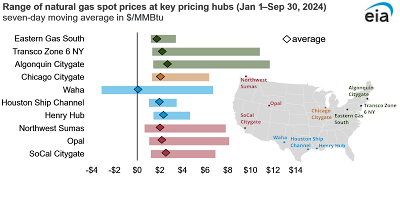
The combination of these changes in supply and demand led U.S. natural gas prices to a ten-year low last year. The spot
price at the Henry Hub trading point averaged $2.74/MMBtu for the year,
down 31 percent from 2011. Spot prices at Henry Hub ranged from a low
of $1.82/MMBtu to $3.77/MMBtu at the onset of the winter heating season. Most of the country enjoyed low natural gas prices, although pipeline constraints led to much higher pricing in New England, particularly in the winter.
Federal report details U.S. natural gas market
Monday, May 20, 2013
Labels:
coal,
FERC,
gas,
Henry Hub,
Marcellus Shale,
market,
Office of Enforcement,
report,
shale
Oregon coal export plans stopped
Thursday, May 9, 2013
The United
States is one of the world’s top coal producers and exporters, but recent plans
to add coal export capacity in the Pacific Northwest have not been fulfilled,
as several proposed export terminals have been withdrawn. Plans for yet another terminal have been
scrapped, as yesterday Kinder Morgan Energy Partners LP canceled its proposed
Clatskanie, Oregon project. What does
this mean for U.S. coal exports and for domestic pricing?
Kinder Morgan Energy Partners is a publicly traded master-limited partnership,or MLP, focused on pipeline infrastructure. Along with fellow Kinder Morgan family companies Kinder Morgan, Inc., Kinder Morgan Management, LLC, and El Paso Pipeline Partners, Kinder Morgan claims to be the largest midstream and the third largest energy company (based on combined enterprise value) in North America. The company owns or operates about 80,000 miles of pipelines and 180 terminals handling products like natural gas, refined petroleum products, crude oil, and carbon dioxide, as well as gasoline, jet fuel, ethanol, coal, petroleum coke and steel. It boasts of operating primarily “like a giant toll road”, and seeks to avoid commodity price risk through a fee-for-service model.
Most coal export capacity in the U.S. is located in the Midatlantic and Gulf Coast regions. While Asia dominates the world coal import market, major markets for U.S. coal exports include Canada, Brazil, the Netherlands, and the European Union. The principal West Coast coal export port is Los Angeles/Long Beach, with virtually no export capacity in the Pacific Northwest. Kinder Morgan had proposed a terminal to be built at the Port Westward industrial park on the Columbia River near Clatskanie. Yesterday project partner Port of St. Helens stated that Kinder Morgan had announced that it would not be pursuing the project.
Up to six Pacific Northwest coal export terminates have been proposed in recent years, but to date none have been built. The Kinder Morgan proposal joins a series of other canceled Pacific Northwest coal export plans. RailAmerica Inc. announced last year that it would not pursue a coal storage and export facility at Washington’s Port of Grays Harbor. Earlier this year, the Oregon International Port of Coos Bay announced the end of its exclusive negotiating agreement between with Metropolitan Stevedoring Company (Metro Ports) to build a thermal coal and biomass export facility. With the Kinder Morgan project gone, three potential terminals remain: Australian company Ambre Energy’s barge-loading operation at the port of Morrow and Port Westward, Millennium Bulk Terminals’ proposed $643 million dock west of Longview, and SSA Marine’s proposed $600 million coal terminal at Cherry Point.
Kinder Morgan Energy Partners is a publicly traded master-limited partnership,or MLP, focused on pipeline infrastructure. Along with fellow Kinder Morgan family companies Kinder Morgan, Inc., Kinder Morgan Management, LLC, and El Paso Pipeline Partners, Kinder Morgan claims to be the largest midstream and the third largest energy company (based on combined enterprise value) in North America. The company owns or operates about 80,000 miles of pipelines and 180 terminals handling products like natural gas, refined petroleum products, crude oil, and carbon dioxide, as well as gasoline, jet fuel, ethanol, coal, petroleum coke and steel. It boasts of operating primarily “like a giant toll road”, and seeks to avoid commodity price risk through a fee-for-service model.
Most coal export capacity in the U.S. is located in the Midatlantic and Gulf Coast regions. While Asia dominates the world coal import market, major markets for U.S. coal exports include Canada, Brazil, the Netherlands, and the European Union. The principal West Coast coal export port is Los Angeles/Long Beach, with virtually no export capacity in the Pacific Northwest. Kinder Morgan had proposed a terminal to be built at the Port Westward industrial park on the Columbia River near Clatskanie. Yesterday project partner Port of St. Helens stated that Kinder Morgan had announced that it would not be pursuing the project.
Up to six Pacific Northwest coal export terminates have been proposed in recent years, but to date none have been built. The Kinder Morgan proposal joins a series of other canceled Pacific Northwest coal export plans. RailAmerica Inc. announced last year that it would not pursue a coal storage and export facility at Washington’s Port of Grays Harbor. Earlier this year, the Oregon International Port of Coos Bay announced the end of its exclusive negotiating agreement between with Metropolitan Stevedoring Company (Metro Ports) to build a thermal coal and biomass export facility. With the Kinder Morgan project gone, three potential terminals remain: Australian company Ambre Energy’s barge-loading operation at the port of Morrow and Port Westward, Millennium Bulk Terminals’ proposed $643 million dock west of Longview, and SSA Marine’s proposed $600 million coal terminal at Cherry Point.
Whether a coal export terminal will be developed in the Pacific
Northwest is uncertain. If not, it will
continue to be difficult for coal produced in the western U.S. to reach the
world’s largest demands for coal imports.
China, Japan,
South Korea, India, and even the relatively small Chinese Taipei have led the demand
for coal imports in recent years. This opens significant economic activity. At the
same time, environmentalists argue that new export projects would contribute to
global pollution and greenhouse gas emissions.
Combined with the pressures of the commodity market for coal and other
fuels, these dynamics may continue to block expanded West Coast export plans. As is being argued over the issue of
liquefied natural gas exports, whether coal exports are expanded could also
have impacts for U.S. coal pricing.
Labels:
Canada,
China,
coal,
export,
greenhouse gas,
India,
Japan,
Kinder Morgan,
Master Limited Partnership,
midstream,
MLP,
natural gas,
oil,
Oregon,
Pacific Northwest,
pipeline,
South Korea,
terminal,
Washington
Massachusetts solar power goal reached, expanded
Wednesday, May 8, 2013
Massachusetts has surpassed its goal of being home to 250 megawatts of installed solar energy capacity four years early. Governor Deval Patrick's administration and the state legislature have adopted a series of policies favoring the development of solar energy, including a target of reaching 250 MW by 2017. Last week the administration announced that this goal had already been reached, and established a new goal of 1,600 MW by 2020.
Solar power in Massachusetts has grown significantly in recent years. In 2007, the Commonwealth hosted just 3 MW of solar capacity. Since then, Massachusetts has adopted a variety of incentives for renewable power production. Chief among these is the Renewable Portfolio Standard (RPS) Solar Carve-Out program. State law currently requires utilities to source up to 400 MW from in-state solar photovoltaic projects. Utilities purchase solar renewable energy certificates, or SRECs, representing the environmental attributes of electricity produced by qualified projects. These SRECs come in addition to the actual power produced by projects, and carry a premium value over other renewable attribute products. State laws such as the 2008 Green Communities Act have provided additional incentives, including technical assistance and financial support for solar development.
Given current policies and market dynamics, solar power in Massachusetts will likely continue to grow. While the bulk of newly installed capacity is likely to be in the form of distributed generation (as opposed to very large-scale utility installations as are under development in the desert Southwest), Massachusetts will continue to see projects ranging from residential rooftop-scale to close to 10 MW. Reaching 1,600 MW within the next seven years will be a challenge, and may depend on continued policy support and market trends, but the recent rate of growth and relative enthusiasm suggest this may be possible.
Solar power in Massachusetts has grown significantly in recent years. In 2007, the Commonwealth hosted just 3 MW of solar capacity. Since then, Massachusetts has adopted a variety of incentives for renewable power production. Chief among these is the Renewable Portfolio Standard (RPS) Solar Carve-Out program. State law currently requires utilities to source up to 400 MW from in-state solar photovoltaic projects. Utilities purchase solar renewable energy certificates, or SRECs, representing the environmental attributes of electricity produced by qualified projects. These SRECs come in addition to the actual power produced by projects, and carry a premium value over other renewable attribute products. State laws such as the 2008 Green Communities Act have provided additional incentives, including technical assistance and financial support for solar development.
Given current policies and market dynamics, solar power in Massachusetts will likely continue to grow. While the bulk of newly installed capacity is likely to be in the form of distributed generation (as opposed to very large-scale utility installations as are under development in the desert Southwest), Massachusetts will continue to see projects ranging from residential rooftop-scale to close to 10 MW. Reaching 1,600 MW within the next seven years will be a challenge, and may depend on continued policy support and market trends, but the recent rate of growth and relative enthusiasm suggest this may be possible.
Labels:
Green Communities Act,
Massachusetts,
photovoltaic,
REC,
RPS,
solar,
SREC
Grid operator expects sufficient electricity this summer
Wednesday, May 1, 2013
Regional electricity grid operator ISO New England, Inc. issued its 2013 summer outlook on April 29. In that report, New England regional transmission organization found that regional electricity supplies during the upcoming summer are expected to be sufficient to meet consumer demand under normal weather conditions. But if any number of contingencies occur, such as a heat wave, the grid could be seriously strained.
ISO New England noted that under normal conditions, there should be enough electricity this summer. But it identified a series of risk factors could tip the balance of supply and demand for electricity, including extreme summer weather conditions or unexpected resource outages. These factors could create "operational challenges", meaning a hard time finding enough electricity to meet peak demand. New England may be forced to resort to importing emergency power from neighboring regions, and asking businesses and people to voluntarily conserve energy.
The report's base assumption is for "normal" summer weather conditions of about 90 degrees in key southern New England cities. Under these conditions, ISO New England forecasts electricity demand could reach 26,690 megawatts (MW). If an extended heat wave pushes temperatures to 95, demand could rise to 28,985 MW. Last summer’s load peaked July 17 at 25,880 MW, about 3% smaller than the base amount forecast for summer 2013. New England set its record for peak demand on August 2, 2006, when demand reached 28,130 MW.
On the supply side, ISO New England identified several risks that could lead to unexpected shortages of electricity. First, most natural gas pipeline maintenance in the region is scheduled for the summer months. Maintenance activities could affect natural gas supplies to some power plants. On this point, the grid operator said it was coordinating with the pipeline companies to ensure that the supply is adequate for power generation during the maintenance season.
Second, liquefied natural gas (LNG) is in high global demand. Current LNG prices are roughly three times higher in Europe and Japan than in the United States. This mean LNG deliveries into New England might be reduced this summer. At times, New England electric generation relies on LNG, which could also affect power plant operations.
Overall, ISO New England reported that it expects electricity supplies to be sufficient to meet consumer demand under normal weather conditions this summer. If shortages occur, they will likely affect both the reliability of the grid and the wholesale price of power. The winter season is likely to be worse, as regional demand for natural gas for heating increases during the winter, placing a tighter squeeze on the amount and price of gas available for electric generation. The grid operator's prediction will be put to the test in the coming months.
ISO New England noted that under normal conditions, there should be enough electricity this summer. But it identified a series of risk factors could tip the balance of supply and demand for electricity, including extreme summer weather conditions or unexpected resource outages. These factors could create "operational challenges", meaning a hard time finding enough electricity to meet peak demand. New England may be forced to resort to importing emergency power from neighboring regions, and asking businesses and people to voluntarily conserve energy.
The report's base assumption is for "normal" summer weather conditions of about 90 degrees in key southern New England cities. Under these conditions, ISO New England forecasts electricity demand could reach 26,690 megawatts (MW). If an extended heat wave pushes temperatures to 95, demand could rise to 28,985 MW. Last summer’s load peaked July 17 at 25,880 MW, about 3% smaller than the base amount forecast for summer 2013. New England set its record for peak demand on August 2, 2006, when demand reached 28,130 MW.
On the supply side, ISO New England identified several risks that could lead to unexpected shortages of electricity. First, most natural gas pipeline maintenance in the region is scheduled for the summer months. Maintenance activities could affect natural gas supplies to some power plants. On this point, the grid operator said it was coordinating with the pipeline companies to ensure that the supply is adequate for power generation during the maintenance season.
Second, liquefied natural gas (LNG) is in high global demand. Current LNG prices are roughly three times higher in Europe and Japan than in the United States. This mean LNG deliveries into New England might be reduced this summer. At times, New England electric generation relies on LNG, which could also affect power plant operations.
Overall, ISO New England reported that it expects electricity supplies to be sufficient to meet consumer demand under normal weather conditions this summer. If shortages occur, they will likely affect both the reliability of the grid and the wholesale price of power. The winter season is likely to be worse, as regional demand for natural gas for heating increases during the winter, placing a tighter squeeze on the amount and price of gas available for electric generation. The grid operator's prediction will be put to the test in the coming months.
Labels:
demand,
demand response,
ISO New England,
ISO-NE,
LNG,
maintenance,
natural gas,
New England,
pipeline,
supply
Changes in how New England generates electricity
Tuesday, April 30, 2013
Society can use a number of different energy resources to generate electricity. We typically rely on a portfolio of multiple fuels to meet our needs, but the composition of this energy resource mix can affect the reliability, cost and environmental impacts of electricity generation. Through most of the twentieth century, in most regions of the United States, coal dominated the mix. Today, new resources like natural gas and nuclear power play major roles. The resource mix continues to evolve, with significant changes since 2000 alone.
New England provides a prime example of these shifts. According to regional grid operator ISO New England's 2013 Regional Energy Outlook (48-page PDF), in 2000 the largest share of power generated in the region came from nuclear power (31%). Nuclear power continued to provide a similar share of our electricity in 2012, but it has been bypassed by natural gas-fired generation as the largest source of our power. While natural gas contributed just 15% of regional electricity in 2000, last year it provided more than half (52%) of all electricity in New England. The growth of natural gas comes as the result of several trends, including the availability of relatively low-cost gas as well as natural gas's favorable emissions and environmental impacts compared to oil and coal.
Indeed, the amount of power generated by burning oil and coal in New England has fallen sharply. While oil-fired generation provided 22% of our needs in 2000, last year less than 1% of our power came from oil. The high cost of oil, combined with the availability of extensive capacity to generate electricity from natural gas, drove this marked decrease in the electric power sector's use of oil. Likewise, coal-fueled power has declined from 18% in 2000 to just 3% in 2012. Tighter federal air emissions standards and pollution control requirements, combined with the age of the coal-powered fleet and the availability of low-cost natural gas, have made coal-fired power largely uneconomic in New England.
According to the numbers, natural gas's ascendancy has not come at the expense of renewable power. The share of regional electricity produced from hydropower and other renewable energy resources held steady at 13% from 2000 to 2012.
What are the implications of this shift in New England's portfolio of energy resources? Lower average wholesale energy prices are one result. As electricity produced from oil and coal became more expensive, the cost of electricity produced from natural gas fell. Combined with the shift in the resource mix, these changes have led to relatively lower prices for electricity. This price decrease has been partially offset by increases in the cost of utility transmission and distribution service, but most consumers see lower electricity prices today than they did in 2000.
New England provides a prime example of these shifts. According to regional grid operator ISO New England's 2013 Regional Energy Outlook (48-page PDF), in 2000 the largest share of power generated in the region came from nuclear power (31%). Nuclear power continued to provide a similar share of our electricity in 2012, but it has been bypassed by natural gas-fired generation as the largest source of our power. While natural gas contributed just 15% of regional electricity in 2000, last year it provided more than half (52%) of all electricity in New England. The growth of natural gas comes as the result of several trends, including the availability of relatively low-cost gas as well as natural gas's favorable emissions and environmental impacts compared to oil and coal.
Indeed, the amount of power generated by burning oil and coal in New England has fallen sharply. While oil-fired generation provided 22% of our needs in 2000, last year less than 1% of our power came from oil. The high cost of oil, combined with the availability of extensive capacity to generate electricity from natural gas, drove this marked decrease in the electric power sector's use of oil. Likewise, coal-fueled power has declined from 18% in 2000 to just 3% in 2012. Tighter federal air emissions standards and pollution control requirements, combined with the age of the coal-powered fleet and the availability of low-cost natural gas, have made coal-fired power largely uneconomic in New England.
According to the numbers, natural gas's ascendancy has not come at the expense of renewable power. The share of regional electricity produced from hydropower and other renewable energy resources held steady at 13% from 2000 to 2012.
What are the implications of this shift in New England's portfolio of energy resources? Lower average wholesale energy prices are one result. As electricity produced from oil and coal became more expensive, the cost of electricity produced from natural gas fell. Combined with the shift in the resource mix, these changes have led to relatively lower prices for electricity. This price decrease has been partially offset by increases in the cost of utility transmission and distribution service, but most consumers see lower electricity prices today than they did in 2000.
Labels:
coal,
emissions,
energy mix,
hydropower,
ISO-NE,
natural gas,
New England,
nuclear,
oil,
portfolio,
Renewable,
transmission costs
Maine funds available for anaerobic digestion
Monday, April 29, 2013
The state of Maine has announced funds available to help farmers reduce their agricultural impacts to water quality. State agencies have made up to $3 million available to enable low-interest loans to support eligible projects. These projects may include developing anaerobic digesters, as well as improved roof runoff structures, water and sediment control basins, composting facilities, and irrigation system water conservation.
Anaerobic digesters enable the conversion of organic materials such as manure and other agricultural wastes into biogas. Biogas, largely composed of methane, can be used as a fuel source comparable to natural gas. For example, it can be used to power an electric generator and thus to produce renewable electricity – all while making efficient use of manure and agricultural wastes that could otherwise harm water quality.
Under the program, farmers will be able to borrow up to $450,000 at a fixed interest rate of 2 percent for up to 20 years to develop qualifying projects. The opportunity represents a partnership between the Maine Departments of Environmental Protection and Agriculture, Conservation and Forestry, the Finance Authority of Maine and the Maine Municipal Bond Bank. The initial seed money comes from the DEP-administered Clean Water State Revolving Fund. Since 1989, that fund has provided over $650 million in low-interest loans for water quality projects, primarily hosted by publicly owned wastewater treatment facilities. For the newly-announced program, the fund will transfer up to $3 million to FAME, which will finance the loans.
For more information on the opportunity, contact either participating department, or consult a professional experienced with anaerobic digestion and state-funded incentive programs. The Preti Flaherty team advises clients on both the development of anaerobic digestion facilities and participation in government-backed loan programs. For more information, please contact Todd Griset at 207-623-5300.
Anaerobic digesters enable the conversion of organic materials such as manure and other agricultural wastes into biogas. Biogas, largely composed of methane, can be used as a fuel source comparable to natural gas. For example, it can be used to power an electric generator and thus to produce renewable electricity – all while making efficient use of manure and agricultural wastes that could otherwise harm water quality.
| Two anaerobic digesters at Stonyvale Farm in Exeter, Maine. |
Under the program, farmers will be able to borrow up to $450,000 at a fixed interest rate of 2 percent for up to 20 years to develop qualifying projects. The opportunity represents a partnership between the Maine Departments of Environmental Protection and Agriculture, Conservation and Forestry, the Finance Authority of Maine and the Maine Municipal Bond Bank. The initial seed money comes from the DEP-administered Clean Water State Revolving Fund. Since 1989, that fund has provided over $650 million in low-interest loans for water quality projects, primarily hosted by publicly owned wastewater treatment facilities. For the newly-announced program, the fund will transfer up to $3 million to FAME, which will finance the loans.
For more information on the opportunity, contact either participating department, or consult a professional experienced with anaerobic digestion and state-funded incentive programs. The Preti Flaherty team advises clients on both the development of anaerobic digestion facilities and participation in government-backed loan programs. For more information, please contact Todd Griset at 207-623-5300.
Labels:
agriculture,
anaerobic digestion,
biogas,
compost,
loan program,
Maine DEP,
manure,
methane,
water
Master Limited Partnerships for clean renewable energy
Thursday, April 25, 2013
An organizational structure called Master Limited Partnerships has the potential to increase private-sector investment in clean energy. Master Limited Partnerships, or MLPs, benefit from a tax structure under which investors are taxed as partners but can trade their ownership stakes on securities exchanges much like corporate stock. Newly proposed federal legislation could extend this treatment to clean energy technologies.
MLPs offer their investors an attractive combination of tax advantages and liquidity. Profit from most publicly traded corporations is taxed twice, at both the corporate level and the shareholder level. By contrast, income from MLPs is taxed only at the shareholder level because it is treated as a partnership for tax purposes. Like Real Estate Investment Trusts or REITs, MLPs thus combine the tax benefits of a limited partnership with the liquidity of publicly traded securities.
Under federal law, MLP treatment is limited to enterprises generating at least 90 percent of their income from qualifying sources. These generally involve the use of natural resources, such as the production, processing or transportation of petroleum, natural gas, coal, timber, and other minerals. Since 1981, the use of the MLP structure has grown; estimates suggest that over 100 MLPs are currently being traded on major exchanges, with a total market valuation of about $445 billion.
Yesterday Congress introduced proposed bipartisan legislation that would extend this tax structure to clean energy technologies. The Master Limited Partnerships Parity Act, formally known as S.795: A bill to amend the Internal Revenue Code of 1986 to extend the publicly traded partnership ownership structure to energy power generation projects and transportation fuels, and for other purposes, is sponsored by Sen. Chris Coons, D-Del., along with co-sponsors Sens. Jerry Moran; R-Kan., Debbie Stabenow, D-Mich.; and Lisa Murkowski, R-Alaska. It has been referred to the Senate Committee on Finance.
The Master Limited Partnerships Parity Act would significantly broaden the scope of projects eligible for MLP treatment to include clean energy resources and infrastructure projects. These projects would include any energy technologies that qualify for the federal production tax credit or investment tax credit, such as wind, closed and open loop biomass, geothermal, solar, municipal solid waste, hydropower, marine and hydrokinetic, fuel cells, and combined heat and power. The bill would also open the MLP structure to advanced transportation fuels such as cellulosic, ethanol, biodiesel, and algae-based fuels, as well as energy-efficient buildings, electricity storage, carbon capture and storage, renewable chemicals, and waste-heat-to-power technologies.
Proponents hope that the act would stimulate investment in clean energy projects much as it has worked for other extractive natural resource infrastructure. At the same time, concern over the federal budget calls for serious consideration of measures that would reduce federal tax revenues. So far, the bill seems to have broad support and little outspoken opposition. If enacted, it could lead to an influx of investment capital into renewable and clean energy technologies.
MLPs offer their investors an attractive combination of tax advantages and liquidity. Profit from most publicly traded corporations is taxed twice, at both the corporate level and the shareholder level. By contrast, income from MLPs is taxed only at the shareholder level because it is treated as a partnership for tax purposes. Like Real Estate Investment Trusts or REITs, MLPs thus combine the tax benefits of a limited partnership with the liquidity of publicly traded securities.
Under federal law, MLP treatment is limited to enterprises generating at least 90 percent of their income from qualifying sources. These generally involve the use of natural resources, such as the production, processing or transportation of petroleum, natural gas, coal, timber, and other minerals. Since 1981, the use of the MLP structure has grown; estimates suggest that over 100 MLPs are currently being traded on major exchanges, with a total market valuation of about $445 billion.
Yesterday Congress introduced proposed bipartisan legislation that would extend this tax structure to clean energy technologies. The Master Limited Partnerships Parity Act, formally known as S.795: A bill to amend the Internal Revenue Code of 1986 to extend the publicly traded partnership ownership structure to energy power generation projects and transportation fuels, and for other purposes, is sponsored by Sen. Chris Coons, D-Del., along with co-sponsors Sens. Jerry Moran; R-Kan., Debbie Stabenow, D-Mich.; and Lisa Murkowski, R-Alaska. It has been referred to the Senate Committee on Finance.
The Master Limited Partnerships Parity Act would significantly broaden the scope of projects eligible for MLP treatment to include clean energy resources and infrastructure projects. These projects would include any energy technologies that qualify for the federal production tax credit or investment tax credit, such as wind, closed and open loop biomass, geothermal, solar, municipal solid waste, hydropower, marine and hydrokinetic, fuel cells, and combined heat and power. The bill would also open the MLP structure to advanced transportation fuels such as cellulosic, ethanol, biodiesel, and algae-based fuels, as well as energy-efficient buildings, electricity storage, carbon capture and storage, renewable chemicals, and waste-heat-to-power technologies.
Proponents hope that the act would stimulate investment in clean energy projects much as it has worked for other extractive natural resource infrastructure. At the same time, concern over the federal budget calls for serious consideration of measures that would reduce federal tax revenues. So far, the bill seems to have broad support and little outspoken opposition. If enacted, it could lead to an influx of investment capital into renewable and clean energy technologies.
Funding to reduce barriers to marine, hydrokinetic energy
Tuesday, April 2, 2013
The U.S. Department of Energy has announced a competitive funding opportunity designed to support the growing marine hydrokinetic energy industry. $1.9 million is available for projects that will improve the collection and analysis of environmental monitoring and experimental data from marine hydrokinetic devices.
Marine hydrokinetic energy technologies capture the energy embodied in moving ocean water such as tides, currents, and waves. While the marine hydrokinetic industry is relatively young, at least one project has been licensed by the Federal Energy Regulatory Commission and built off the Maine coast. Research and development efforts are ongoing regarding a variety of marine hydrokinetic technologies and devices, and their environmental impacts continue to be studied.
The recently-announced federal funding aims to support that environmental evaluation. Working with the National Oceanographic Partnership Program, the Department of Energy's Office of Energy Efficiency and Renewable Energy Wind and Water Power Technologies Office has issued a Funding Opportunity Announcement entitled “Marine and Hydrokinetic (MHK) Environmental Effects Assessment and Monitoring.”
Under that Funding Opportunity Announcement, the Department of Energy offers $1.9 million in funding to be split by up to 11 recipients. Specific project areas include studies of fish behavior and mortality around hydrokinetic turbines, improved environmental monitoring of marine hydrokinetic projects, and predictive modeling of marine hydrokinetic projects' environmental impacts based on surrogate technologies with stressors and receptors similar to those expected from marine hydrokinetic technologies.
Under the competitive solicitation, the Department of Energy requested Letters of Intent to be submitted by 11:59 Eastern Time on April 18, 2013. Full applications, which must include specified documents, must be submitted by 5:00 PM ET on May 16, 2013. For more information, visit the Department of Energy's official Funding Opportunity Announcement website or contact Todd Griset at Preti Flaherty.
| Looking east from Griffith Head, Reid State Park, Maine. Damariscove Island, a proposed offshore wind site, sits on the right horizon. |
Marine hydrokinetic energy technologies capture the energy embodied in moving ocean water such as tides, currents, and waves. While the marine hydrokinetic industry is relatively young, at least one project has been licensed by the Federal Energy Regulatory Commission and built off the Maine coast. Research and development efforts are ongoing regarding a variety of marine hydrokinetic technologies and devices, and their environmental impacts continue to be studied.
The recently-announced federal funding aims to support that environmental evaluation. Working with the National Oceanographic Partnership Program, the Department of Energy's Office of Energy Efficiency and Renewable Energy Wind and Water Power Technologies Office has issued a Funding Opportunity Announcement entitled “Marine and Hydrokinetic (MHK) Environmental Effects Assessment and Monitoring.”
Under that Funding Opportunity Announcement, the Department of Energy offers $1.9 million in funding to be split by up to 11 recipients. Specific project areas include studies of fish behavior and mortality around hydrokinetic turbines, improved environmental monitoring of marine hydrokinetic projects, and predictive modeling of marine hydrokinetic projects' environmental impacts based on surrogate technologies with stressors and receptors similar to those expected from marine hydrokinetic technologies.
Under the competitive solicitation, the Department of Energy requested Letters of Intent to be submitted by 11:59 Eastern Time on April 18, 2013. Full applications, which must include specified documents, must be submitted by 5:00 PM ET on May 16, 2013. For more information, visit the Department of Energy's official Funding Opportunity Announcement website or contact Todd Griset at Preti Flaherty.
Labels:
competitive,
current,
Department of Energy,
FERC,
funding,
Funding Opportunity Announcement,
grant,
hydrokinetic,
Maine,
marine hydrokinetic,
MHK,
Ocean,
ORPC,
tide,
wave
USDA announces renewable and energy efficiency funding
Friday, March 29, 2013
The United States Department of Agriculture has announced a new round of funding for assistance to agricultural producers and rural small businesses for energy efficiency and renewable energy projects. USDA's Rural Energy for America Program (REAP) offers eligible farms and businesses incentives to improve their energy efficiency or produce energy from renewable sources.
USDA's mission includes revitalization of rural economies to create opportunities for growth and prosperity, support innovative technologies, identify new markets for agricultural producers, and make better use of natural resources. Authorized by the 2008 farm bill (formally the Food, Conservation, and Energy Act of 2008), the USDA REAP program's goals are to help agricultural producers and rural small businesses reduce energy costs and consumption and help meet the nation's critical energy needs. Through the end of the 2012 fiscal year, REAP has funded over 6,800 renewable energy and energy efficiency projects, feasibility studies, energy audits, and renewable energy development assistance projects.
Today USDA announced that it will accept applications for three REAP program categories:
Application requirements for REAP assistance vary depending on the type of assistance sought. Those interested in applying for assistance can contact their local USDA office for more information, or consult a professional with experience working with the REAP program.
Preti Flaherty helps our clients evaluate whether REAP assistance is a good match for their businesses; I have assisted my clients in securing REAP funding for their energy projects. Please contact us at 207-791-3000 for more information.
USDA's mission includes revitalization of rural economies to create opportunities for growth and prosperity, support innovative technologies, identify new markets for agricultural producers, and make better use of natural resources. Authorized by the 2008 farm bill (formally the Food, Conservation, and Energy Act of 2008), the USDA REAP program's goals are to help agricultural producers and rural small businesses reduce energy costs and consumption and help meet the nation's critical energy needs. Through the end of the 2012 fiscal year, REAP has funded over 6,800 renewable energy and energy efficiency projects, feasibility studies, energy audits, and renewable energy development assistance projects.
Today USDA announced that it will accept applications for three REAP program categories:
- Renewable energy system and energy efficiency improvement grant applications and combination grant and guaranteed loan applications until April 30, 2013
- Renewable energy system and energy efficiency improvement guaranteed loan only applications until July 15, 2013
- Renewable energy system feasibility study grant applications through April 30, 2013
Application requirements for REAP assistance vary depending on the type of assistance sought. Those interested in applying for assistance can contact their local USDA office for more information, or consult a professional with experience working with the REAP program.
Preti Flaherty helps our clients evaluate whether REAP assistance is a good match for their businesses; I have assisted my clients in securing REAP funding for their energy projects. Please contact us at 207-791-3000 for more information.
Labels:
energy efficiency,
farm,
federal budget,
grant,
incentive,
loan guarantee,
REAP,
renewable energy,
sequestration,
USDA
Linking North American carbon markets
Wednesday, March 27, 2013
As nations, states, and provinces establish carbon markets, there is considerable interest in establishing links between these markets. Two of North America's leading carbon markets - one overseen by the California Air Resources Board (CARB), the other by the Canadian province of Quebec - appear to be on track to link their cap-and-trade systems by January 1, 2014.
A 2006 California law known as AB 32, the Global Warming Solutions Act, established a greenhouse gas cap-and-trade program. The program covers major sources of greenhouse gas emissions in the California, including refineries, power plants, industrial facilities, and transportation fuels. CARB established regulations which set an enforceable greenhouse gas emissions cap. This cap will decline over time. The law requires covered entities to acquire allowances issued by CARB to cover their carbon emissions. These allowances are tradeable permits allowing the holder to emit a given amount of carbon dioxide or its equivalent.
Quebec joined the Western Climate Initiative (WCI) in April 2008, a group of American states and Canadian provinces that have decided to adopt a common approach toward addressing climate change. WCI's goals include the creation of a North American market for trading carbon emission rights. Each WCI member government first creates its own greenhouse gas emissions cap-and-trade system, then links to others through intergovernmental recognition agreements.
California and Quebec's programs are now in the process of linking up. According to a recently-issued CARB document, California and Quebec have been working together to ensure that both systems' operations are compatible and will work together and without disruption to California-covered entities.
According to the notice, linkage between California and Quebec will need to be effective as of January 1, 2014. In the interim, California and Quebec will hold a practice joint auction to test their auction platform, allow market participants to gain familiarity with the future procedures for a linked market, and to allow the jurisdictions to evaluate their readiness for the newly expanded market.
This linkage would not directly affect other North American carbon markets, such as the Regional Greenhouse Gas Initiative or RGGI market. RGGI represents an agreement by nine northeastern states to create a pooled carbon market. Other jurisdictions could join the RGGI market, and it is possible that the RGGI market could one day merge with the CARB and Quebec markets to form a broader North American carbon market. The linkage of the California and Quebec programs may serve as a test of the effectiveness of linking the various North American carbon markets.
A 2006 California law known as AB 32, the Global Warming Solutions Act, established a greenhouse gas cap-and-trade program. The program covers major sources of greenhouse gas emissions in the California, including refineries, power plants, industrial facilities, and transportation fuels. CARB established regulations which set an enforceable greenhouse gas emissions cap. This cap will decline over time. The law requires covered entities to acquire allowances issued by CARB to cover their carbon emissions. These allowances are tradeable permits allowing the holder to emit a given amount of carbon dioxide or its equivalent.
Quebec joined the Western Climate Initiative (WCI) in April 2008, a group of American states and Canadian provinces that have decided to adopt a common approach toward addressing climate change. WCI's goals include the creation of a North American market for trading carbon emission rights. Each WCI member government first creates its own greenhouse gas emissions cap-and-trade system, then links to others through intergovernmental recognition agreements.
California and Quebec's programs are now in the process of linking up. According to a recently-issued CARB document, California and Quebec have been working together to ensure that both systems' operations are compatible and will work together and without disruption to California-covered entities.
According to the notice, linkage between California and Quebec will need to be effective as of January 1, 2014. In the interim, California and Quebec will hold a practice joint auction to test their auction platform, allow market participants to gain familiarity with the future procedures for a linked market, and to allow the jurisdictions to evaluate their readiness for the newly expanded market.
This linkage would not directly affect other North American carbon markets, such as the Regional Greenhouse Gas Initiative or RGGI market. RGGI represents an agreement by nine northeastern states to create a pooled carbon market. Other jurisdictions could join the RGGI market, and it is possible that the RGGI market could one day merge with the CARB and Quebec markets to form a broader North American carbon market. The linkage of the California and Quebec programs may serve as a test of the effectiveness of linking the various North American carbon markets.
Report: northeastern demand drives natural gas pipeline growth
Monday, March 25, 2013
A federal energy agency has highlighted the demand for natural gas in the northeastern United States. The U.S. Energy Information Administration's report shows that over half of U.S. natural gas pipeline projects installed in 2012 were in the Northeast region. Low-cost gas produced from the Marcellus shale formation, combined with increased demand for gas in the Northeast, are driving pipeline expansion - but significant bottlenecks remain, keeping New England's natural gas prices higher and more volatile than those in the rest of the country.
For the past several years, natural gas pipeline capacity in the U.S. has grown. According to EIA, overall investment in domestic natural gas pipeline capacity slowed in 2012, but the northeast United States was home to the majority of growth. Other than facilities for gathering, storing, and distributing natural gas, natural gas pipeline capacity expansions totaled $1.8 billion in capital expenditures in 2012, adding 4.5 billion cubic feet per day of new pipeline capacity and 367 miles of pipe.
Most projects placed in service in 2012 focused on removing constraints that blocked natural gas from the booming Marcellus shale gas from reaching markets in the Northeast. Northeastern pipe additions accounted for two-thirds of all new pipeline mileage placed service in 2012. These additions included large projects such as the Appalachian Gateway Project and the Sunrise Project, both of which are designed to transport natural gas from the Marcellus production zone to markets in the Northeast.
Despite this growth, the New England and New York markets still experience frequent pipeline constraints, meaning that inbound pipeline capacity is insufficient to transport enough gas to meet consumer demand many days per year. This results in not only volatile natural gas pricing in New England, but fundamentally higher prices for consumers. Because the price of natural gas in New England sets the price of electricity most of the time, the result is a double-whammy of high wholesale prices for both electricity and natural gas.
Further pipeline capacity expansions into New England could alleviate these bottlenecks, but it is unclear who will build the capacity or when it will occur. Until it does, New England will remain exposed to high and volatile prices for natural gas and electricity.
![]() | ||
| Graphic courtesy of the U.S. Energy Information Administration, available at http://www.eia.gov/todayinenergy/detail.cfm?id=10511. |
For the past several years, natural gas pipeline capacity in the U.S. has grown. According to EIA, overall investment in domestic natural gas pipeline capacity slowed in 2012, but the northeast United States was home to the majority of growth. Other than facilities for gathering, storing, and distributing natural gas, natural gas pipeline capacity expansions totaled $1.8 billion in capital expenditures in 2012, adding 4.5 billion cubic feet per day of new pipeline capacity and 367 miles of pipe.
Most projects placed in service in 2012 focused on removing constraints that blocked natural gas from the booming Marcellus shale gas from reaching markets in the Northeast. Northeastern pipe additions accounted for two-thirds of all new pipeline mileage placed service in 2012. These additions included large projects such as the Appalachian Gateway Project and the Sunrise Project, both of which are designed to transport natural gas from the Marcellus production zone to markets in the Northeast.
Despite this growth, the New England and New York markets still experience frequent pipeline constraints, meaning that inbound pipeline capacity is insufficient to transport enough gas to meet consumer demand many days per year. This results in not only volatile natural gas pricing in New England, but fundamentally higher prices for consumers. Because the price of natural gas in New England sets the price of electricity most of the time, the result is a double-whammy of high wholesale prices for both electricity and natural gas.
Further pipeline capacity expansions into New England could alleviate these bottlenecks, but it is unclear who will build the capacity or when it will occur. Until it does, New England will remain exposed to high and volatile prices for natural gas and electricity.
Labels:
Appalachian Gateway,
bottleneck,
capacity,
constraint,
electricity,
Marcellus,
natural gas,
New England,
New York,
Northeast,
pipeline,
price,
shale,
Sunrise,
volatility
Maine considers renewable feed-in tariff
Wednesday, March 20, 2013
The Maine legislature is set to consider a bill that would create a feed-in tariff for renewable energy. Maine already has a renewable portfolio standard and other incentives for investment in renewable power production. Will Maine add a feed-in tariff to the mix?
A feed-in tariff is a policy tool intended to encourage investment in renewable energy
technologies. Feed-in tariffs typically offer long-term contracts under which utilities purchase power fromrenewable energy producers at predictable prices, often based on the cost of generation of
each technology. Where feed-in tariffs exist, developers of renewable energy projects gain certainty about the revenues their projects will create. This certainty helps developers secure the financing they need to build projects.
A bill proposed by Maine state senator Christopher Johnson would require the state Public Utilities Commission to establish a renewable energy resources feed-in tariff program. An Act To Establish the Renewable Energy Feed-in Tariff, also known as LD 1085, has the stated purpose of encouraging the rapid and sustainable development of renewable energy resources and technology for environmentally healthy generation of electricity. Like feed-in tariffs in other jurisdictions, it would require that utilities purchase renewably produced electricity from all qualified suppliers. It would have the Public Utilities Commission set the rate that electric utilities must pay for such power at a level sufficient to provide revenues to operate and to attract necessary capital and investment for small renewable electric generators.
Qualified suppliers would be limited to certain small renewable electric generators. As defined in the bill, such generators would be limited to systems up to 500 kilowatts in size, that are majority owned by a person or entity that owns less than 500 kilowatts of electricity generating capacity in Maine, and that use solar photovoltaic panels or solar thermal or concentrating solar systems, generators fueled by methane from sewage treatment facilities, landfills or agricultural waste, generators fueled by combustion of biomass, tidal power projects, or wind energy.
Existing Maine law provides incentives for the generation of electricity from renewable resources. Like most states, Maine has a renewable portfolio standard which requires electricity suppliers to source a specified portion of their power from renewable generators. Maine also has a community-based renewable energy pilot program which functions like a feed-in tariff for eligible projects. A feed-in tariff would add another incentive to build relatively small (non-utility-scale) projects.
LD 1085 has not yet been scheduled for a public hearing. It will likely come before the Joint Standing Committee on Energy, Utilities and Technology later this spring.
![]() |
| The Maine State House, home to a consideration of feed-in tariffs. |
A bill proposed by Maine state senator Christopher Johnson would require the state Public Utilities Commission to establish a renewable energy resources feed-in tariff program. An Act To Establish the Renewable Energy Feed-in Tariff, also known as LD 1085, has the stated purpose of encouraging the rapid and sustainable development of renewable energy resources and technology for environmentally healthy generation of electricity. Like feed-in tariffs in other jurisdictions, it would require that utilities purchase renewably produced electricity from all qualified suppliers. It would have the Public Utilities Commission set the rate that electric utilities must pay for such power at a level sufficient to provide revenues to operate and to attract necessary capital and investment for small renewable electric generators.
Qualified suppliers would be limited to certain small renewable electric generators. As defined in the bill, such generators would be limited to systems up to 500 kilowatts in size, that are majority owned by a person or entity that owns less than 500 kilowatts of electricity generating capacity in Maine, and that use solar photovoltaic panels or solar thermal or concentrating solar systems, generators fueled by methane from sewage treatment facilities, landfills or agricultural waste, generators fueled by combustion of biomass, tidal power projects, or wind energy.
Existing Maine law provides incentives for the generation of electricity from renewable resources. Like most states, Maine has a renewable portfolio standard which requires electricity suppliers to source a specified portion of their power from renewable generators. Maine also has a community-based renewable energy pilot program which functions like a feed-in tariff for eligible projects. A feed-in tariff would add another incentive to build relatively small (non-utility-scale) projects.
LD 1085 has not yet been scheduled for a public hearing. It will likely come before the Joint Standing Committee on Energy, Utilities and Technology later this spring.
Labels:
anaerobic digestion,
biomass,
community-based,
feed-in tariff,
Maine,
methane,
pilot project,
Renewable,
sewage,
solar,
tidal,
wind
UAE opens first 100 MW solar project
Tuesday, March 19, 2013
The United Arab Emirates has recognized the start-up of its largest solar energy project to date.
The Shams 1 solar plant generates of electricity by concentrating solar thermal energy to vaporize a fluid into steam, which in turn spins a turbine. Shams 1 can produce up to 100 megawatts of power, making the project the world's largest concentrating solar power projects.
Concentrating solar power, or CSP projects, use mirrors to heat a working fluid and ultimately to produce steam. Shams 1 uses parabolic trough mirrors to focus the sun's energy on pipes full of a working fluid, while other concentrating solar projects focus mirrors on a central tower containing the working fluid. That working fluid's heat is then exchanged into water, which vaporizes into superheated steam. It is this steam that spins the turbine attached to an electric generator. Concentrating solar thermal projects differ from those using photovoltaic technology, in which the sun's energy is converted into direct current electricity using specialized semiconductors.
Shams 1 was developed by Shams Power Company PJSC, a special purpose vehicle owned 60% by UAE-owned Masdar and 40% by the Total Abengoa Solar Emirates Investment Company, a vehicle in turn jointly owned by Total (50%) and Abengoa (50%). These companies are said to have invested $600 million in building Shams 1.
With its commissioning, Shams 1 becomes the first utility-scale renewable power project in the UAE. Other first and "biggests" include the largest financing transaction for a solar power project (US$600 million) the largest operating single pure concentrating solar plant in the world.
UAE is blessed with energy resources. For years, interest has focused on its oil and gas production. Shams 1 is a small step toward resource diversification. Will UAE continue to invest in alternative and renewable energy?
The Shams 1 solar plant generates of electricity by concentrating solar thermal energy to vaporize a fluid into steam, which in turn spins a turbine. Shams 1 can produce up to 100 megawatts of power, making the project the world's largest concentrating solar power projects.
Concentrating solar power, or CSP projects, use mirrors to heat a working fluid and ultimately to produce steam. Shams 1 uses parabolic trough mirrors to focus the sun's energy on pipes full of a working fluid, while other concentrating solar projects focus mirrors on a central tower containing the working fluid. That working fluid's heat is then exchanged into water, which vaporizes into superheated steam. It is this steam that spins the turbine attached to an electric generator. Concentrating solar thermal projects differ from those using photovoltaic technology, in which the sun's energy is converted into direct current electricity using specialized semiconductors.
Shams 1 was developed by Shams Power Company PJSC, a special purpose vehicle owned 60% by UAE-owned Masdar and 40% by the Total Abengoa Solar Emirates Investment Company, a vehicle in turn jointly owned by Total (50%) and Abengoa (50%). These companies are said to have invested $600 million in building Shams 1.
With its commissioning, Shams 1 becomes the first utility-scale renewable power project in the UAE. Other first and "biggests" include the largest financing transaction for a solar power project (US$600 million) the largest operating single pure concentrating solar plant in the world.
UAE is blessed with energy resources. For years, interest has focused on its oil and gas production. Shams 1 is a small step toward resource diversification. Will UAE continue to invest in alternative and renewable energy?
Labels:
Abengoa,
concentrating solar,
gas,
Masdar,
oil,
Shams,
solar,
solar thermal,
Total,
UAE
Maine may streamline tidal power permitting
Friday, March 15, 2013
The Maine legislature is considering a proposal to streamline the permitting process for some tidal energy projects. The bill, "An Act To Streamline the General Permit Process for Tidal Power", would relieve a perceived conflict between state and federal law over the permitting process.
Tidal energy has been harvested along the Maine coast for hundreds of years. While tide mills' heyday predated modern regulation of energy projects and their environmental impacts, anyone developing a modern tidal power project must navigate multiple layers of rules and requirements. The recent resurgence of interest in tidal energy has led to an often overlapping patchwork of regulations.
These rules can be hard to interpret, and occasionally lead to chicken-or-the-egg conundrums. For example, a 2009 Maine law created an expedited general permit process for certain small tidal power projects. Under that process, projects capable of generating up to 5 megawatts of power can qualify for an easier permitting path if their primary purpose is demonstrating or testing tidal technology. (By way of comparison, 5 megawatts is roughly equivalent to 6,705 horsepower - imagine what a tide miller could have done with that!)
Prior to filing a permit application with the Maine Department of Environmental Protection under the 2009 law, an applicant must first obtain a finding from the Federal Energy Regulatory Commission that the project will have no significant adverse impact on environmental quality. Unfortunately, before issuing that finding federal regulators want applicants to show that they are already seeking state approval. This regulatory conflict makes it hard for people who want to develop or redevelop a tidal resource to move forward.
To fix this problem, the DEP, Senator Mike Thibodeau of Waldo County, and Representative Joyce Maker of Calais proposed an amendment to Maine law. Their bill, known as LD 437, would enable the DEP to start processing an application without needing to wait for the federal environmental assessment. After a public hearing earlier this month, the legislature's Joint Standing Committee on Environment and Natural Resources voted to recommend that the bill ought to pass as amended.
Next steps for the tidal streamlining bill include consideration by the full Senate and House. Given the committee's vote, the bill seems likely to find further support in the two chambers. While its enactment may not launch a tide of new tidal power developments in Maine, relieving this piece of the regulatory tangle should help people test and demonstrate tidal power technologies old and new.
Tidal energy has been harvested along the Maine coast for hundreds of years. While tide mills' heyday predated modern regulation of energy projects and their environmental impacts, anyone developing a modern tidal power project must navigate multiple layers of rules and requirements. The recent resurgence of interest in tidal energy has led to an often overlapping patchwork of regulations.
These rules can be hard to interpret, and occasionally lead to chicken-or-the-egg conundrums. For example, a 2009 Maine law created an expedited general permit process for certain small tidal power projects. Under that process, projects capable of generating up to 5 megawatts of power can qualify for an easier permitting path if their primary purpose is demonstrating or testing tidal technology. (By way of comparison, 5 megawatts is roughly equivalent to 6,705 horsepower - imagine what a tide miller could have done with that!)
Prior to filing a permit application with the Maine Department of Environmental Protection under the 2009 law, an applicant must first obtain a finding from the Federal Energy Regulatory Commission that the project will have no significant adverse impact on environmental quality. Unfortunately, before issuing that finding federal regulators want applicants to show that they are already seeking state approval. This regulatory conflict makes it hard for people who want to develop or redevelop a tidal resource to move forward.
To fix this problem, the DEP, Senator Mike Thibodeau of Waldo County, and Representative Joyce Maker of Calais proposed an amendment to Maine law. Their bill, known as LD 437, would enable the DEP to start processing an application without needing to wait for the federal environmental assessment. After a public hearing earlier this month, the legislature's Joint Standing Committee on Environment and Natural Resources voted to recommend that the bill ought to pass as amended.
Next steps for the tidal streamlining bill include consideration by the full Senate and House. Given the committee's vote, the bill seems likely to find further support in the two chambers. While its enactment may not launch a tide of new tidal power developments in Maine, relieving this piece of the regulatory tangle should help people test and demonstrate tidal power technologies old and new.
Labels:
demonstration,
environmental assessment,
expedited permitting,
FERC,
FONSI,
horsepower,
Maine DEP,
permit,
technology,
tidal,
tide,
tide mill
Mid-Atlantic electric grid operator plans $2.4 billion in upgrades due to fossil-fuel plant retirements
Tuesday, March 12, 2013
The operator of the mid-Atlantic electric grid has announced a need for $2.4 billion in grid upgrades to keep the lights on in the coming years, as fossil-fueled generators shut down.
PJM Interconnection LLC is the regional transmission organization that manages wholesale electricity markets and the transmission grid in all or parts of 13 states and the District of Columbia, covering about 60 million people. In that role, PJM works with electric utilities and merchant generators to identify upgrades needed to maintain reliable electric service throughout its territory. In 2012, PJM authorized more than 750 electric transmission improvement projects with a total cost of more than $5 billion.
PJM released its annual regional transmission expansion plan on March 7. In that plan, PJM identified three major trends driving the need for further grid upgrades: upcoming power plant retirements, the rapid switch to natural gas, and the growth of wind power to meet states’ renewable energy requirements.
Of these, the large-scale retirement of fossil-fueled power plants may pose the greatest challenge. Power plant operators must inform PJM if they plan to close their plants, and are doing so in droves. PJM received 104 retirement requests between November 2011 and December 2012. In all, these requests signal intents to shutter 13,868 megawatts of generation. Retirement requests continue to roll in; in January 2013 alone, an additional 1,697 megawatts of generation filed notices of intents to retire. This tide of closures is driven largely by relatively low electricity prices and increased costs for coal- and oil-fired generation due to environmental and emissions regulations.
At the same time, 2012 brought a record amount of new generation to the PJM market, primarily fueled by natural gas. Meanwhile, the addition of new renewable resources to the grid - such as wind-powered generators - adds another layer of challenge, as these renewable projects are often located in relatively remote areas far from consumers in urban centers.
PJM must ensure enough power to keep its customers' lights on, a task that requires both having enough operating generators and the right amount of transmission to connect generators to customers. As a result, PJM has identified 130 projects needed to maintain reliability. These projects include new transmission lines, line rebuilds, equipment upgrades, and new and expanded substations, and substation additions.
Much of PJM's analysis is based on assumptions about which generation plants will close, which new generation plants will be built and come online, and how much consumer demand for electricity will grow. Will PJM's predictions come true? If so, consumers will bear the cost of PJM's identified grid fixes.
PJM Interconnection LLC is the regional transmission organization that manages wholesale electricity markets and the transmission grid in all or parts of 13 states and the District of Columbia, covering about 60 million people. In that role, PJM works with electric utilities and merchant generators to identify upgrades needed to maintain reliable electric service throughout its territory. In 2012, PJM authorized more than 750 electric transmission improvement projects with a total cost of more than $5 billion.
PJM released its annual regional transmission expansion plan on March 7. In that plan, PJM identified three major trends driving the need for further grid upgrades: upcoming power plant retirements, the rapid switch to natural gas, and the growth of wind power to meet states’ renewable energy requirements.
Of these, the large-scale retirement of fossil-fueled power plants may pose the greatest challenge. Power plant operators must inform PJM if they plan to close their plants, and are doing so in droves. PJM received 104 retirement requests between November 2011 and December 2012. In all, these requests signal intents to shutter 13,868 megawatts of generation. Retirement requests continue to roll in; in January 2013 alone, an additional 1,697 megawatts of generation filed notices of intents to retire. This tide of closures is driven largely by relatively low electricity prices and increased costs for coal- and oil-fired generation due to environmental and emissions regulations.
At the same time, 2012 brought a record amount of new generation to the PJM market, primarily fueled by natural gas. Meanwhile, the addition of new renewable resources to the grid - such as wind-powered generators - adds another layer of challenge, as these renewable projects are often located in relatively remote areas far from consumers in urban centers.
PJM must ensure enough power to keep its customers' lights on, a task that requires both having enough operating generators and the right amount of transmission to connect generators to customers. As a result, PJM has identified 130 projects needed to maintain reliability. These projects include new transmission lines, line rebuilds, equipment upgrades, and new and expanded substations, and substation additions.
Much of PJM's analysis is based on assumptions about which generation plants will close, which new generation plants will be built and come online, and how much consumer demand for electricity will grow. Will PJM's predictions come true? If so, consumers will bear the cost of PJM's identified grid fixes.
Labels:
closure,
coal,
generation,
load,
load growth,
natural gas,
oil,
PJM,
reliability,
Renewable,
retirement,
transmission,
transmission upgrade,
wind
Senate climate bill proposes carbon fee
Monday, March 11, 2013
Senators Barbara Boxer of California and Bernie Sanders of Vermont have introduced climate legislation that would impose a fee of $20 per ton of carbon or methane equivalent emitted. The Climate Protection Act of 2013 provides measures designed to "address climate disruptions, reduce carbon pollution, enhance the use of clean energy, and promote resilience in the infrastructure of the United States". What does the Senate climate bill do -- and what are its chances of passage?
The centerpiece of the Climate Protection Act of 2013 is a fee imposed by the Administrator of the U.S. Environmental Protection Agency on carbon emissions. Starting in 2014, the carbon pollution fee would be $20 per ton of carbon dioxide or equivalent. For the next 10 years, the fee would increase by 5.6 percent per year, after which it would hold steady at about $34 per ton.
The fee would apply to any manufacturer, producer, or importer of a carbon polluting substance, defined as coal (including lignite and peat), petroleum and any petroleum product, or natural gas that releases greenhouse gas emissions when combusted or used. The fee would apply whether the carbon polluting substance is produced in the U.S. or is imported. As designed, it would be an "upstream" fee, meaning only the first producer or importer of the substance would have to pay the fee directly; subsequent users would not be liable for the fee, although they would likely pay a higher price to acquire the fuel as the the upstream entity passes its costs along.
60% of the funds raised from the carbon pollution fee would be used to provide a monthly residential environmental rebate to legal residents of the United States. The remainder would be used to create a Pollution Reduction Trust Fund. The Trust Fund would be divided up for five purposes. $7.5 billion per year would go to the EPA to mitigate the economic impacts of the carbon pollution fee on energy-intensive and trade-exposed industries. $5 billion shall be available to the Department of Energy to carry out a Weatherization Assistance Program for Low-Income Persons. $1 billion would go to the Secretary of Labor for job training, education, and transition assistance for individuals employed by the fossil fuel industry. $2 billion will go to the Advanced Research Projects Agency-Energy program. The balance shall be used shall be used for federal budget deficit reduction, as would the entire Trust Fund after 2024.
To protect domestic industry against competitive harms caused by the carbon pollution fee, the Climate Protection Act of 2013 also includes a carbon equivalency fee on imports of carbon pollution-intensive goods. Those goods would include iron, steel, a steel mill product (including pipe and tube), aluminum, cement, glass (including flat, container, and specialty glass and fiberglass), pulp, paper, a chemical, or an industrial ceramic, as well as any other goods whose production is deemed to have similar carbon intensity.
Funds raised the carbon equivalency fee would be split between the EPA and the Department of Transportation. The EPA would use its share primarily to fund state and local programs that assist communities in adapting to climate change, improving the resiliency of critical infrastructure; and protecting environmental quality and wildlife. EPA could also use the funds to meet international commitments made by the United States to assist with climate change adaptation. The Department of Transportation's share would be used to fund state and local programs that assist communities in improving the resiliency of critical infrastructure and for projects that provide preferential parking for carpools, including the addition of electric vehicle charging stations.
Will the Climate Protection Act of 2013 pass? Congress has previously considered several structures to encourage a shift to lower-carbon energy resources, ranging from creating a national cap-and-trade market to a carbon tax. To date, none has passed, although individual states and regions have created cap-and-trade programs like the Regional Greenhouse Gas Initiative (RGGI) and the California Air Resources Board market. President Obama called on Congress to address climate change and carbon emissions in his 2013 State of the Union address, and other jurisdictions such as the Canadian province of British Columbia have enacted a carbon tax. Could the carbon fee and dividend structure proposed in the Climate Protection Act of 2013 be the solution? At the least, it will provoke a national dialogue about carbon emissions and the federal government's role in managing them.
The centerpiece of the Climate Protection Act of 2013 is a fee imposed by the Administrator of the U.S. Environmental Protection Agency on carbon emissions. Starting in 2014, the carbon pollution fee would be $20 per ton of carbon dioxide or equivalent. For the next 10 years, the fee would increase by 5.6 percent per year, after which it would hold steady at about $34 per ton.
The fee would apply to any manufacturer, producer, or importer of a carbon polluting substance, defined as coal (including lignite and peat), petroleum and any petroleum product, or natural gas that releases greenhouse gas emissions when combusted or used. The fee would apply whether the carbon polluting substance is produced in the U.S. or is imported. As designed, it would be an "upstream" fee, meaning only the first producer or importer of the substance would have to pay the fee directly; subsequent users would not be liable for the fee, although they would likely pay a higher price to acquire the fuel as the the upstream entity passes its costs along.
60% of the funds raised from the carbon pollution fee would be used to provide a monthly residential environmental rebate to legal residents of the United States. The remainder would be used to create a Pollution Reduction Trust Fund. The Trust Fund would be divided up for five purposes. $7.5 billion per year would go to the EPA to mitigate the economic impacts of the carbon pollution fee on energy-intensive and trade-exposed industries. $5 billion shall be available to the Department of Energy to carry out a Weatherization Assistance Program for Low-Income Persons. $1 billion would go to the Secretary of Labor for job training, education, and transition assistance for individuals employed by the fossil fuel industry. $2 billion will go to the Advanced Research Projects Agency-Energy program. The balance shall be used shall be used for federal budget deficit reduction, as would the entire Trust Fund after 2024.
To protect domestic industry against competitive harms caused by the carbon pollution fee, the Climate Protection Act of 2013 also includes a carbon equivalency fee on imports of carbon pollution-intensive goods. Those goods would include iron, steel, a steel mill product (including pipe and tube), aluminum, cement, glass (including flat, container, and specialty glass and fiberglass), pulp, paper, a chemical, or an industrial ceramic, as well as any other goods whose production is deemed to have similar carbon intensity.
Funds raised the carbon equivalency fee would be split between the EPA and the Department of Transportation. The EPA would use its share primarily to fund state and local programs that assist communities in adapting to climate change, improving the resiliency of critical infrastructure; and protecting environmental quality and wildlife. EPA could also use the funds to meet international commitments made by the United States to assist with climate change adaptation. The Department of Transportation's share would be used to fund state and local programs that assist communities in improving the resiliency of critical infrastructure and for projects that provide preferential parking for carpools, including the addition of electric vehicle charging stations.
Will the Climate Protection Act of 2013 pass? Congress has previously considered several structures to encourage a shift to lower-carbon energy resources, ranging from creating a national cap-and-trade market to a carbon tax. To date, none has passed, although individual states and regions have created cap-and-trade programs like the Regional Greenhouse Gas Initiative (RGGI) and the California Air Resources Board market. President Obama called on Congress to address climate change and carbon emissions in his 2013 State of the Union address, and other jurisdictions such as the Canadian province of British Columbia have enacted a carbon tax. Could the carbon fee and dividend structure proposed in the Climate Protection Act of 2013 be the solution? At the least, it will provoke a national dialogue about carbon emissions and the federal government's role in managing them.
Labels:
ARPA-E,
Barbara Boxer,
Bernie Sanders,
California,
cap-and-trade,
CARB,
carbon,
carbon fee,
carbon tax,
coal,
imports,
low carbon,
natural gas,
petroleum,
RGGI,
trust fund,
upstream,
Vermont,
weatherization
Keystone XL pipeline supplemental Environmental Impact Statement
Thursday, March 7, 2013
The proposed Keystone XL pipeline took a step forward this month, as the U.S. State Department released its evaluation of the project's potential environmental impacts. The draft Supplemental Environmental Impact Statement (EIS) released on March 1, 2013 documents the State Department's analysis of the pipeline's impacts to environmental resources based on the currently proposed route. The EIS is still preliminary, and is now subject to public comment. Moreover, even a final EIS would not reach any conclusion as to whether the pipeline serves the national public interest, and the project would still need a presidential permit to ship oil across the US-Canadian border. Nevertheless the draft EIS does suggest that any environmental impacts from the pipeline would be relatively minor.
The Keystone XL project is a proposed extension of an existing crude oil pipeline. The $7 billion project would run from the Canadian province of Alberta to Texas, delivering Canadian crude to refineries on the U.S. Gulf Coast. The oil shipped on the pipeline would likely include so-called synthetic crude derived from Canada's oil sands or "tar sands" resources.
The draft EIS (available from the State Department's website) makes a series of findings about the project's potential environmental impacts, ranging from direct impacts along the pipeline's route to indirect impacts like further development of the Alberta oil sands. As the State Department found in its earlier environmental review, the supplemental EIS found that the pipeline would not have significant impacts to any resources along the proposed project route.
Notably, the draft EIS found that Keystone XL would not be likely to substantially increase the rate of development of the oil sands, nor would it likely increase the volume of crude oil refined in the Gulf Coast. For example, the draft found that denial of the pipeline's presidential permit would not mean a reduction in oil production in Western Canada or from the Bakken formation; rather, oil producers would resort to other transportation modes such as pipelines to British Columbia or even rail shipment of crude. For similar reasons, the draft EIS found that the Keystone XL pipeline would not substantively change global greenhouse gas emissions.
Next steps for the Keystone XL project include a 45-day public comment period, after which the State Department will issue a final EIS. Later this year, the State Department is expected to issue a so-called national interest determination, considering factors including foreign policy, economics, environmental concerns, and national security. This determination will involve consultation with other agencies, including the U.S. Departments of Defense, Justice, Interior, Commerce, Transportation, Energy, Homeland Security and the Environmental Protection Agency. The final decision whether to allow the pipeline falls to President Obama.
The Keystone XL project is a proposed extension of an existing crude oil pipeline. The $7 billion project would run from the Canadian province of Alberta to Texas, delivering Canadian crude to refineries on the U.S. Gulf Coast. The oil shipped on the pipeline would likely include so-called synthetic crude derived from Canada's oil sands or "tar sands" resources.
The draft EIS (available from the State Department's website) makes a series of findings about the project's potential environmental impacts, ranging from direct impacts along the pipeline's route to indirect impacts like further development of the Alberta oil sands. As the State Department found in its earlier environmental review, the supplemental EIS found that the pipeline would not have significant impacts to any resources along the proposed project route.
Notably, the draft EIS found that Keystone XL would not be likely to substantially increase the rate of development of the oil sands, nor would it likely increase the volume of crude oil refined in the Gulf Coast. For example, the draft found that denial of the pipeline's presidential permit would not mean a reduction in oil production in Western Canada or from the Bakken formation; rather, oil producers would resort to other transportation modes such as pipelines to British Columbia or even rail shipment of crude. For similar reasons, the draft EIS found that the Keystone XL pipeline would not substantively change global greenhouse gas emissions.
Next steps for the Keystone XL project include a 45-day public comment period, after which the State Department will issue a final EIS. Later this year, the State Department is expected to issue a so-called national interest determination, considering factors including foreign policy, economics, environmental concerns, and national security. This determination will involve consultation with other agencies, including the U.S. Departments of Defense, Justice, Interior, Commerce, Transportation, Energy, Homeland Security and the Environmental Protection Agency. The final decision whether to allow the pipeline falls to President Obama.
Shell announces LNG plants for transportation sector
Wednesday, March 6, 2013
Energy company Royal Dutch Shell PLC has announced plans to build two liquified natural gas (LNG) plants in North America to produce fuel for marine and heavy-duty on-road transportation.
Shell, a global group of energy and petrochemicals companies, may be most famous for its roadside gas stations, but also operates businesses in crude oil and natural gas production, refining, marketing, and research and development. According to a press release issued yesterday, Shell and its affiliates now plan to develop two liquefaction units to turn natural gas into LNG.
By cooling natural gas to around -260°F, it can be liquefied. The resulting LNG takes up significantly less volume than the gas did, making it easier to ship and store. Unlike gas taken directly off a pipeline, LNG can also be used as a mobile fuel source for transportation. Compared to oil-based fuels such as diesel and gasoline, LNG can be less expensive and may create fewer emissions of carbon dioxide and pollutants.
Shell's newly announced plants will be built in Geismar, Louisiana and Sarnia, Ontario, Canada. The Geismar plant will supply LNG along the Mississippi River, the Intra-Coastal Waterway and to the offshore Gulf of Mexico and the onshore oil and gas exploration areas of Texas and Louisiana. Shell is partnering with companies including subsidiaries of Martin Resource Management Corporation and Edison Chouest Offshore to supply LNG fuel to marine vessels that operate in the Gulf of Mexico. Under Shell's vision, LNG produced at Geismar will be barged to Port Fourchon, Louisiana, where it will be bunkered into customer vessels. Shell also announced plans for a similar liquefaction unit at its Shell Sarnia Manufacturing Centre in Sarnia, Ontario, Canada. The Sarnia project is designed to supply LNG fuel to all five Great Lakes, their bordering U.S. states and Canadian provinces and the St. Lawrence Seaway.
Each facility will be relatively small-scale, capable of producing 250,000 tons of gas per year. According to Shell, pending final regulatory permitting, the liquefaction units may begin operations and production in about three years. Shell is currently developing a similar gas processing facility in Alberta, Canada, and plans to sell LNG at truck stops in that province.
Several years ago, energy companies rushed to develop LNG import terminals in the U.S. to increase supplies of natural gas in the interstate pipeline system. Hydraulic fracturing and the resulting development of feasible production of domestic natural gas from shale resources turned LNG imports' economics on their heads. Now that natural gas in most of the U.S. is significantly cheaper than imported LNG, companies like Cheniere Energy Inc. are now seeking to export LNG to other countries. Domestic use of LNG in the transportation sector represents an alternative way for energy companies to profit from the shale gas boom.
Shell, a global group of energy and petrochemicals companies, may be most famous for its roadside gas stations, but also operates businesses in crude oil and natural gas production, refining, marketing, and research and development. According to a press release issued yesterday, Shell and its affiliates now plan to develop two liquefaction units to turn natural gas into LNG.
By cooling natural gas to around -260°F, it can be liquefied. The resulting LNG takes up significantly less volume than the gas did, making it easier to ship and store. Unlike gas taken directly off a pipeline, LNG can also be used as a mobile fuel source for transportation. Compared to oil-based fuels such as diesel and gasoline, LNG can be less expensive and may create fewer emissions of carbon dioxide and pollutants.
Shell's newly announced plants will be built in Geismar, Louisiana and Sarnia, Ontario, Canada. The Geismar plant will supply LNG along the Mississippi River, the Intra-Coastal Waterway and to the offshore Gulf of Mexico and the onshore oil and gas exploration areas of Texas and Louisiana. Shell is partnering with companies including subsidiaries of Martin Resource Management Corporation and Edison Chouest Offshore to supply LNG fuel to marine vessels that operate in the Gulf of Mexico. Under Shell's vision, LNG produced at Geismar will be barged to Port Fourchon, Louisiana, where it will be bunkered into customer vessels. Shell also announced plans for a similar liquefaction unit at its Shell Sarnia Manufacturing Centre in Sarnia, Ontario, Canada. The Sarnia project is designed to supply LNG fuel to all five Great Lakes, their bordering U.S. states and Canadian provinces and the St. Lawrence Seaway.
Each facility will be relatively small-scale, capable of producing 250,000 tons of gas per year. According to Shell, pending final regulatory permitting, the liquefaction units may begin operations and production in about three years. Shell is currently developing a similar gas processing facility in Alberta, Canada, and plans to sell LNG at truck stops in that province.
Several years ago, energy companies rushed to develop LNG import terminals in the U.S. to increase supplies of natural gas in the interstate pipeline system. Hydraulic fracturing and the resulting development of feasible production of domestic natural gas from shale resources turned LNG imports' economics on their heads. Now that natural gas in most of the U.S. is significantly cheaper than imported LNG, companies like Cheniere Energy Inc. are now seeking to export LNG to other countries. Domestic use of LNG in the transportation sector represents an alternative way for energy companies to profit from the shale gas boom.
Utilities plan over $51.1 billion in transmission development
Tuesday, March 5, 2013
Growth in renewable electricity production will drive significant upgrades to the U.S. electric transmission grid, according to a study released by the Edison Electric Institute. EEI's seventh annual "Transmission Projects: At a Glance" identifies over 150 transmission projects planned by EEI member utilities for development over the next decade. According to the report, these projects entail investments of at least $51.1 billion through 2023. While the transmission projects may advance multiple goals, the majority of the projected investments will be for projects supporting the integration of renewable resources into the grid.
EEI is a trade association composed of investor-owned electric utilities. Its members represent approximately 70 percent of the U.S. electric power industry. EEI tracks transmission investment by its members. According to the report, annual transmission investment is increasing, from 11.1 billion in 2011 to approximately $15.1 billion in 2013. At the same time, EEI has revised its total future projection downward. In 2012, EEI members reported $64 billion in planned transmission over the next decade, but changing projections of system needs have revised that number downward to $51.1 billion.
Under federal laws including the Energy Policy Act of 2005, utilities are given incentives to develop transmission lines and related assets. These incentives are designed to ensuring a safe and reliable electric grid, but also reward utilities for developing projects to integrate renewable resources like wind farms into the grid. Because ratepayers ultimately bear the cost of transmission infrastructure, the Federal Energy Regulatory Commission and state public utilities commission regulate utility proposals to expand the grid.
According to EEI, most proposed transmission projects advance multiple goals. The study shows that 76% of projects (approximately $38.7 billion) are pitched as supporting the integration of renewable resources. In the aggregate, these projects entail the addition or upgrade of 13,300 miles of transmission lines. Similarly, most projects are designed to enable electricity to flow across state lines; 52% ($26.5 billion) represent large interstate transmission projects spanning multiple states.
Whether each project identified in the EEI report will be built remains to be seen. As demand for electricity shifts -- whether due to energy efficiency improvements, a declining economy, or newly proposed generating projects -- the need for any given transmission line may diminish. For example, last year the $2 billion Potomac Appalachian Transmission Highline (PATH) project was canceled after it was deemed unnecessary. The proposed Northern Pass transmission project connecting Quebec to New Hampshire is facing significant opposition due to the siting of its planned route, as well as on environmental and economic grounds. Nevertheless, the significant transmission development projected by EEI remains likely to occur in the aggregate.
EEI is a trade association composed of investor-owned electric utilities. Its members represent approximately 70 percent of the U.S. electric power industry. EEI tracks transmission investment by its members. According to the report, annual transmission investment is increasing, from 11.1 billion in 2011 to approximately $15.1 billion in 2013. At the same time, EEI has revised its total future projection downward. In 2012, EEI members reported $64 billion in planned transmission over the next decade, but changing projections of system needs have revised that number downward to $51.1 billion.
Under federal laws including the Energy Policy Act of 2005, utilities are given incentives to develop transmission lines and related assets. These incentives are designed to ensuring a safe and reliable electric grid, but also reward utilities for developing projects to integrate renewable resources like wind farms into the grid. Because ratepayers ultimately bear the cost of transmission infrastructure, the Federal Energy Regulatory Commission and state public utilities commission regulate utility proposals to expand the grid.
According to EEI, most proposed transmission projects advance multiple goals. The study shows that 76% of projects (approximately $38.7 billion) are pitched as supporting the integration of renewable resources. In the aggregate, these projects entail the addition or upgrade of 13,300 miles of transmission lines. Similarly, most projects are designed to enable electricity to flow across state lines; 52% ($26.5 billion) represent large interstate transmission projects spanning multiple states.
Whether each project identified in the EEI report will be built remains to be seen. As demand for electricity shifts -- whether due to energy efficiency improvements, a declining economy, or newly proposed generating projects -- the need for any given transmission line may diminish. For example, last year the $2 billion Potomac Appalachian Transmission Highline (PATH) project was canceled after it was deemed unnecessary. The proposed Northern Pass transmission project connecting Quebec to New Hampshire is facing significant opposition due to the siting of its planned route, as well as on environmental and economic grounds. Nevertheless, the significant transmission development projected by EEI remains likely to occur in the aggregate.
Federal budget sequestration's impacts on energy industry, consumers
Friday, March 1, 2013
Unless Congress enacts a plan to reduce the federal budget deficit today, a procedure known as "sequestration" will take effect immediately, cutting government spending until the budget can be resolved. What will sequestration mean for the energy industry and consumers?
Under the Budget Control Act of 2011 (BCA), sequestration automatically kicks in unless the Joint Select Committee on Deficit Reduction proposes a plan to reduce the deficit by $1.2 trillion, and Congress subsequently enacts that plan. For fiscal year 2013, sequestration could mean spending cuts of $85 billion over the remaining seven months of the fiscal year. According to the federal Office of Management and Budget, nondefense program spending will be cut by about 9%.
Each federal agency's operations will be affected by the sequestration. The OMB Report Pursuant to the Sequestration Transparency Act of 2012 (394-page PDF) details likely cuts, including reductions in funding available under the U.S. Department of Energy's High Energy Cost Grants program. The High Energy Costs Grant program provides funding for improving and providing energy generation, transmission and
distribution facilities serving communities with average home energy
costs exceeding 275% of the national average. For example, the Maine island of Monhegan's electric utility won a $420,154 grant under this program to replace the island's current switchgear, add a smaller, 40 kW generator to the
power station's fleet, and add a 13 kW solar photovoltaic array to the
power station's roof.
The sequestration could also slash funding for the U.S. Department of Agriculture's Rural Energy for America Program (REAP). REAP provides assistance to agricultural producers and rural small businesses to complete energy projects, including
renewable energy systems, energy efficiency improvements, renewable
energy development, energy audits, and feasibility studies
Other programs affected include the DOE's Energy Efficiency and Renewable Energy program, from which $148 million could be cut. Likewise, the Low Income Home Energy Assistance Program (LIHEAP), which helps keep families safe and healthy through initiatives that assist families with energy costs, faces $285 million in cuts.
The funding reductions will also mean cuts to DOE's energy-efficiency and cybersecurity programs. Likewise, the processing of applications for development of oil, gas, and coal on federal lands and waters would slow down as agency employees are furloughed.
Will Congress act to avert sequestration? If it takes effect, how long will it be until Congress enacts a compliant deficit reduction plan? What price will society pay?
Labels:
Congress,
federal budget,
federal land,
High Energy Cost Grants,
LIHEAP,
Monhegan,
REAP,
Renewable,
sequestration,
USDA
What the 2013 State of the Union said about energy
Tuesday, February 12, 2013
Tonight President Obama delivered the 2013 State of the Union address. Energy figured heavily in his remarks, with emphasis on energy efficiency, natural gas production, and renewable energy. His newly proposed policies, some of which require congressional approval, aim to boost the economy while protecting the environment. Here's a look at what he said, relying on the text released online by the New York Times as text as prepared for delivery, as provided by the White House.
The State of the Union is a key opportunity for a president to speak his mind to the public and to Congress. Article II, Section 3 of the U.S. Constitution directs the president to "from time to time give to Congress information of the State of the Union and recommend to their Consideration such measures as he shall judge necessary and expedient." Presidents since Woodrow Wilson have delivered oral addresses to Congress.
President Obama's 2013 State of the Union address presented a number of energy issues and policies. He criticized federal budget sequestration orders as disrupting priority programs including the energy sector:
The State of the Union is a key opportunity for a president to speak his mind to the public and to Congress. Article II, Section 3 of the U.S. Constitution directs the president to "from time to time give to Congress information of the State of the Union and recommend to their Consideration such measures as he shall judge necessary and expedient." Presidents since Woodrow Wilson have delivered oral addresses to Congress.
President Obama's 2013 State of the Union address presented a number of energy issues and policies. He criticized federal budget sequestration orders as disrupting priority programs including the energy sector:
In 2011, Congress passed a law saying that if both parties couldn’t agree on a plan to reach our deficit goal, about a trillion dollars’ worth of budget cuts would automatically go into effect this year. These sudden, harsh, arbitrary cuts would jeopardize our military readiness. They’d devastate priorities like education, energy, and medical research. They would certainly slow our recovery, and cost us hundreds of thousands of jobs. That’s why Democrats, Republicans, business leaders, and economists have already said that these cuts, known here in Washington as “the sequester,” are a really bad idea.Energy security and sovereignty also figured prominently. He cited advances in transportation fuel economy, renewable energy, natural gas, and reductions in carbon emissions:
After years of talking about it, we are finally poised to control our own energy future. We produce more oil at home than we have in 15 years. We have doubled the distance our cars will go on a gallon of gas, and the amount of renewable energy we generate from sources like wind and solar – with tens of thousands of good, American jobs to show for it. We produce more natural gas than ever before – and nearly everyone’s energy bill is lower because of it. And over the last four years, our emissions of the dangerous carbon pollution that threatens our planet have actually fallen.Climate change also returned as a key area of focus, as it had in President Obama's second inaugural speech last month:
But for the sake of our children and our future, we must do more to combat climate change. Yes, it’s true that no single event makes a trend. But the fact is, the 12 hottest years on record have all come in the last 15. Heat waves, droughts, wildfires, and floods – all are now more frequent and intense. We can choose to believe that Superstorm Sandy, and the most severe drought in decades, and the worst wildfires some states have ever seen were all just a freak coincidence. Or we can choose to believe in the overwhelming judgment of science – and act before it’s too late.To address climate change, President Obama asked Congress to develop a market-based solution, but vowed to take executive action if necessary:
Clean energy continues to draw attention, while the development of economically-recoverable natural gas supplies is the latest energy revolution:The good news is, we can make meaningful progress on this issue while driving strong economic growth. I urge this Congress to pursue a bipartisan, market-based solution to climate change, like the one John McCain and Joe Lieberman worked on together a few years ago. But if Congress won’t act soon to protect future generations, I will. I will direct my Cabinet to come up with executive actions we can take, now and in the future, to reduce pollution, prepare our communities for the consequences of climate change, and speed the transition to more sustainable sources of energy.
Four years ago, other countries dominated the clean energy market and the jobs that came with it. We’ve begun to change that. Last year, wind energy added nearly half of all new power capacity in America. So let’s generate even more. Solar energy gets cheaper by the year – so let’s drive costs down even further. As long as countries like China keep going all-in on clean energy, so must we.
In the meantime, the natural gas boom has led to cleaner power and greater energy independence. That’s why my Administration will keep cutting red tape and speeding up new oil and gas permits. But I also want to work with this Congress to encourage the research and technology that helps natural gas burn even cleaner and protects our air and water.
President Obama also promoted energy efficiency, from getting the transportation sector off oil to improving residential, business and industrial energy efficiency. He proposed to create a trust funded by oil and gas leases and royalties to help fund some of these shifts:
Indeed, much of our new-found energy is drawn from lands and waters that we, the public, own together. So tonight, I propose we use some of our oil and gas revenues to fund an Energy Security Trust that will drive new research and technology to shift our cars and trucks off oil for good. If a non-partisan coalition of CEOs and retired generals and admirals can get behind this idea, then so can we. Let’s take their advice and free our families and businesses from the painful spikes in gas prices we’ve put up with for far too long. I’m also issuing a new goal for America: let’s cut in half the energy wasted by our homes and businesses over the next twenty years. The states with the best ideas to create jobs and lower energy bills by constructing more efficient buildings will receive federal support to help make it happen.
Infrastructure investment was another point, including the electric power grid and pipeline networks:
America’s energy sector is just one part of an aging infrastructure badly in need of repair. Ask any CEO where they’d rather locate and hire: a country with deteriorating roads and bridges, or one with high-speed rail and internet; high-tech schools and self-healing power grids. The CEO of Siemens America – a company that brought hundreds of new jobs to North Carolina – has said that if we upgrade our infrastructure, they’ll bring even more jobs. And I know that you want these job-creating projects in your districts. I’ve seen you all at the ribbon-cuttings.
Tonight, I propose a “Fix-It-First” program to put people to work as soon as possible on our most urgent repairs, like the nearly 70,000 structurally deficient bridges across the country. And to make sure taxpayers don’t shoulder the whole burden, I’m also proposing a Partnership to Rebuild America that attracts private capital to upgrade what our businesses need most: modern ports to move our goods; modern pipelines to withstand a storm; modern schools worthy of our children. Let’s prove that there is no better place to do business than the United States of America. And let’s start right away.The 2013 State of the Union address suggests continued growth in U.S. sectors such as energy efficiency, alternative transportation fuels, renewable energy, and infrastructure development and maintenance. Carbon emissions may also be examined, with a national market-based carbon cap and trade program possible such as now exists in California and the northeastern Regional Greenhouse Gas Initiative member states. How Congress and the public react to these remarks remains to be seen, as does how and to what extent President Obama's proposed policy shifts are implemented.
Feds pay damages in Yankee Atomic Power lawsuit
Wednesday, February 6, 2013
The Portland Press Herald reports that the federal government has partially paid damages awarded under a lawsuit filed by the owners of three former nuclear power plants for about $160 million in damages. While final regulatory approvals remain pending, the companies plan to use the award to benefit ratepayers.
The nuclear plants -- Maine Yankee, Connecticut Yankee, and Yankee Rowe -- closed in the 1990s. Federal law requires the federal government to develop a plan for long-term storage and disposal of radioactive waste. While waste removal was supposed to start in 1998, the federal government has yet to designate a permanent waste repository or to remove the spent fuel. As a result, the radioactive waste is stored in concrete casks at the sites of the former plants, at the plant owners' expense. For Maine Yankee, those storage and maintenance costs range from $7 million to $11 million annually, with similar expenses for the other two plants.
The plant owners filed a lawsuit against the federal government in 1998, seeking damages for the cost of maintaining the spent fuel onsite. After a series of awards and appeals, a 2012 U.S. Court of Appeals decision upheld the award of $39,667,243 to Connecticut Yankee and $81,690,866 to Maine Yankee, and increased Yankee Atomic's damages award from $21,246,912.55 to $38,268,654.55.
These amount have reportedly now been paid, and the power companies are proposing how they will use the proceeds to benefit ratepayers. Meanwhile, because the U.S. Court of Claims ruled that utility companies cannot receive damage awards for storage costs that have not yet been incurred, the Yankee Companies have filed a second round of damages claims for approximately $247 million, and anticipate filing a third round of damage claims before the end of 2013.
From 1972 until permanent shutdown in 1997, Maine Yankee operated a 900 megawatt pressurized water reactor in Wiscasset, Maine. During its operations, Maine Yankee was the largest generating station in Maine. The plant closed after its owners received a report by the Nuclear Regulatory Commission staff identifying safety problems that were deemed too costly to fix. Even after closure, the unexpected costs of storing the spent fuel onsite only worsened the plants' economics. The lawsuit judgment is designed to compensate the plant owners for these costs, although the litigation itself carries a price tag for both the companies and the U.S. taxpayer.
What role will nuclear power play in our energy mix in the coming years? For now, no federal waste repository is planned. Safety is paramount, particularly following the 2011 Fukushima disaster in Japan. Nuclear power plants can produce cost-effective baseload electricity, but face the risk of surprise costs such as those faced by Maine Yankee. Can a holistic legal and business solution enable the safe operation of nuclear power plants?
The nuclear plants -- Maine Yankee, Connecticut Yankee, and Yankee Rowe -- closed in the 1990s. Federal law requires the federal government to develop a plan for long-term storage and disposal of radioactive waste. While waste removal was supposed to start in 1998, the federal government has yet to designate a permanent waste repository or to remove the spent fuel. As a result, the radioactive waste is stored in concrete casks at the sites of the former plants, at the plant owners' expense. For Maine Yankee, those storage and maintenance costs range from $7 million to $11 million annually, with similar expenses for the other two plants.
The plant owners filed a lawsuit against the federal government in 1998, seeking damages for the cost of maintaining the spent fuel onsite. After a series of awards and appeals, a 2012 U.S. Court of Appeals decision upheld the award of $39,667,243 to Connecticut Yankee and $81,690,866 to Maine Yankee, and increased Yankee Atomic's damages award from $21,246,912.55 to $38,268,654.55.
These amount have reportedly now been paid, and the power companies are proposing how they will use the proceeds to benefit ratepayers. Meanwhile, because the U.S. Court of Claims ruled that utility companies cannot receive damage awards for storage costs that have not yet been incurred, the Yankee Companies have filed a second round of damages claims for approximately $247 million, and anticipate filing a third round of damage claims before the end of 2013.
From 1972 until permanent shutdown in 1997, Maine Yankee operated a 900 megawatt pressurized water reactor in Wiscasset, Maine. During its operations, Maine Yankee was the largest generating station in Maine. The plant closed after its owners received a report by the Nuclear Regulatory Commission staff identifying safety problems that were deemed too costly to fix. Even after closure, the unexpected costs of storing the spent fuel onsite only worsened the plants' economics. The lawsuit judgment is designed to compensate the plant owners for these costs, although the litigation itself carries a price tag for both the companies and the U.S. taxpayer.
What role will nuclear power play in our energy mix in the coming years? For now, no federal waste repository is planned. Safety is paramount, particularly following the 2011 Fukushima disaster in Japan. Nuclear power plants can produce cost-effective baseload electricity, but face the risk of surprise costs such as those faced by Maine Yankee. Can a holistic legal and business solution enable the safe operation of nuclear power plants?
Labels:
baseload,
lawsuit,
Maine,
Maine Yankee,
nuclear,
nuclear waste,
radioactive,
safety,
storage,
Wiscasset
Super Bowl 2013 power outage
Monday, February 4, 2013
The National Football League held Super Bowl XLVII last night at the Mercedes-Benz Superdome in New Orleans, Louisiana. The game was interrupted by a power outage just after the second half started, which caused many of the stadium lights and systems to go dark. Play was delayed for 34 minutes as workers scrambled to resolve the problem. What happened to the lights at the Super Bowl?
Electric utility Entergy supplies electricity to the Superdome. According to a statement issued jointly with Superdome manager SMG, load-monitoring equipment sensed "an abnormality in the system". To protect systems and isolate the issue, that equipment opened a breaker and partially cut the power feed to the facility. While backup generators kicked in, the backup supply was insufficient to fully power the Superdome's lights and systems.
The Mercedes-Benz Superdome is a significant consumer of electricity. Statements issued by the Super Bowl New Orleans Host Committee suggest that energy usage for major Super Bowl venues including the Mercedes Superdome, Morial Convention Center, Team and NFL hotels, will consume up to 4,600 megawatts of electricity. (Note that this statement is improbable - it should likely read 4,600 kilowatts or 4,600 megawatt-hours. 4,600 megawatts would be about 15% of Entergy's 30,000 MW total generating capacity, and represents more power than 4 typical nuclear power plants can produce. In any event, the Superdome clearly drew a lot of power from the grid.)
The Super Bowl power outage will focus attention on professional sports' approach to energy. NFL teams and stadium owners have been exploring alternative energy for some time; for example, last year the Philadelphia Eagles considered developing solar panels and wind turbines on their stadium. Even the Superdome has invested in energy efficiency, developing an efficient exterior LED lighting system in 2011.
While alternative energy efforts can reduce operating costs and environmental impacts, they are unlikely to completely displace reliance on the utility electric grid. Stadiums' significant power demands during games far outstrip their electricity consumption at other times. This means that stadiums would need to install sizable distributed generation to be self-reliant, but would only need to run that generation for a limited number of hours per year -- making the economics of a distributed generation project challenging.
Traditional, utility-supplied power may remain the most cost-effective basis for large stadium electricity supply for now -- but leaves stadiums, players and fans reliant on their public utilities to keep the lights on. Team and stadium owners eager to avoid the embarrassment and cost of an outage will continue to look for solutions, including more backup generation and more robust grid connections.
Electric utility Entergy supplies electricity to the Superdome. According to a statement issued jointly with Superdome manager SMG, load-monitoring equipment sensed "an abnormality in the system". To protect systems and isolate the issue, that equipment opened a breaker and partially cut the power feed to the facility. While backup generators kicked in, the backup supply was insufficient to fully power the Superdome's lights and systems.
The Mercedes-Benz Superdome is a significant consumer of electricity. Statements issued by the Super Bowl New Orleans Host Committee suggest that energy usage for major Super Bowl venues including the Mercedes Superdome, Morial Convention Center, Team and NFL hotels, will consume up to 4,600 megawatts of electricity. (Note that this statement is improbable - it should likely read 4,600 kilowatts or 4,600 megawatt-hours. 4,600 megawatts would be about 15% of Entergy's 30,000 MW total generating capacity, and represents more power than 4 typical nuclear power plants can produce. In any event, the Superdome clearly drew a lot of power from the grid.)
The Super Bowl power outage will focus attention on professional sports' approach to energy. NFL teams and stadium owners have been exploring alternative energy for some time; for example, last year the Philadelphia Eagles considered developing solar panels and wind turbines on their stadium. Even the Superdome has invested in energy efficiency, developing an efficient exterior LED lighting system in 2011.
While alternative energy efforts can reduce operating costs and environmental impacts, they are unlikely to completely displace reliance on the utility electric grid. Stadiums' significant power demands during games far outstrip their electricity consumption at other times. This means that stadiums would need to install sizable distributed generation to be self-reliant, but would only need to run that generation for a limited number of hours per year -- making the economics of a distributed generation project challenging.
Traditional, utility-supplied power may remain the most cost-effective basis for large stadium electricity supply for now -- but leaves stadiums, players and fans reliant on their public utilities to keep the lights on. Team and stadium owners eager to avoid the embarrassment and cost of an outage will continue to look for solutions, including more backup generation and more robust grid connections.
Oil sands: an "unconventional" oil resource
Monday, January 28, 2013
New technologies enable the production of petroleum from unconventional oil resources such as "tar sands" and oil shale. While traditional oil wells have been drilled for over 2,000 years, unconventional resources offer the opportunity to develop new petroleum sources - and by extension, to shift the balance of power and economics away from traditional sources. At the same time, producing oil from oil sands may have environmental impacts that are different from traditional wells. What are tar sands or oil sands?
Oil sands, also known as bituminous sands, are loose sand or partially consolidated sandstone saturated with a dense and viscous form of petroleum technically referred to as bitumen. Oil sands are often called "tar sands" due to bitumen's sticky, dark nature. ("Tar" technically refers to a product made by distilling pitch from the wood and roots of pine trees, and was historically used to describe the sticky black residue left behind when distilling coal gas.)
Bitumen is so viscous that it cannot be pumped directly from the ground through traditional wells. Oil sand deposits are typically mined using open pits or strip mining. The mined material is mixed with water at an extraction plant, where the bitumen can be separated from the remaining minerals, sand, and water. The bitumen can then be transported for upgrading or conversion into synthetic crude oil.
Alternatively, bitumen can be extracted by heating the raw sands in place. In-situ production methods include injecting steam or solvents, or piping in oxygen and igniting some of the bitumen. These methods rely on the use of large amounts of water and energy.
According to the U.S. government's 2012 oil shale and tar sands programmatic environmental impact statement, about two tons of tar sands can produce one barrel of oil. Extraction and processing typically require several barrels of water for each barrel of oil produced. Some of this water can be recycled.
About three-quarters of the bitumen can be extracted from the raw material. Spent sand and other materials are typically returned to the mine after processing.
Producing oil from bitumen derived from tar sands can have significant environmental impacts. The mining and upgrading processes are energy-intensive and result in emissions of greenhouse gases and air pollutants. Mine sites are typically significantly disturbed, and impacts to water may be both local and throughout the downriver watershed. The association between the proposed Keystone XL pipeline and oil sand resources in Alberta, Canada led to environmental opposition to that pipeline.
Producing oil from oil sands may be controversial, but Canada possesses the world's largest known resources and is developing them rapidly. Canada points to environmental regulations and controls, as well as economic development benefits. Developing oil sand resources creates jobs and economic growth, and mine sites are typically in rural areas eager for opportunity. If the U.S. does not approve the Keystone XL pipeline, Canadian producers may push for an alternative route to refineries or export terminals in British Columbia, obviating the need for U.S. approval.
Economically, synthetic crude oil produced from oil sands bitumen can be cost-effective if the price of oil produced from traditional wells is high. On the other hand, if oil from wells or other unconventional resources like oil shales can be produced cheaply, oil sands may not be economically competitive. The significant capital investment required to produce bitumen from oil sands means that producers must often make long-term investments that risk losing money in some years. Producers may also face the risk of tighter environmental standards, the cost of compliance, and any penalties for noncompliance.
Oil sands, also known as bituminous sands, are loose sand or partially consolidated sandstone saturated with a dense and viscous form of petroleum technically referred to as bitumen. Oil sands are often called "tar sands" due to bitumen's sticky, dark nature. ("Tar" technically refers to a product made by distilling pitch from the wood and roots of pine trees, and was historically used to describe the sticky black residue left behind when distilling coal gas.)
Bitumen is so viscous that it cannot be pumped directly from the ground through traditional wells. Oil sand deposits are typically mined using open pits or strip mining. The mined material is mixed with water at an extraction plant, where the bitumen can be separated from the remaining minerals, sand, and water. The bitumen can then be transported for upgrading or conversion into synthetic crude oil.
Alternatively, bitumen can be extracted by heating the raw sands in place. In-situ production methods include injecting steam or solvents, or piping in oxygen and igniting some of the bitumen. These methods rely on the use of large amounts of water and energy.
According to the U.S. government's 2012 oil shale and tar sands programmatic environmental impact statement, about two tons of tar sands can produce one barrel of oil. Extraction and processing typically require several barrels of water for each barrel of oil produced. Some of this water can be recycled.
About three-quarters of the bitumen can be extracted from the raw material. Spent sand and other materials are typically returned to the mine after processing.
Producing oil from bitumen derived from tar sands can have significant environmental impacts. The mining and upgrading processes are energy-intensive and result in emissions of greenhouse gases and air pollutants. Mine sites are typically significantly disturbed, and impacts to water may be both local and throughout the downriver watershed. The association between the proposed Keystone XL pipeline and oil sand resources in Alberta, Canada led to environmental opposition to that pipeline.
Producing oil from oil sands may be controversial, but Canada possesses the world's largest known resources and is developing them rapidly. Canada points to environmental regulations and controls, as well as economic development benefits. Developing oil sand resources creates jobs and economic growth, and mine sites are typically in rural areas eager for opportunity. If the U.S. does not approve the Keystone XL pipeline, Canadian producers may push for an alternative route to refineries or export terminals in British Columbia, obviating the need for U.S. approval.
Economically, synthetic crude oil produced from oil sands bitumen can be cost-effective if the price of oil produced from traditional wells is high. On the other hand, if oil from wells or other unconventional resources like oil shales can be produced cheaply, oil sands may not be economically competitive. The significant capital investment required to produce bitumen from oil sands means that producers must often make long-term investments that risk losing money in some years. Producers may also face the risk of tighter environmental standards, the cost of compliance, and any penalties for noncompliance.
Labels:
Alberta,
bitumen,
Canada,
crude,
economic development,
energy intensity,
Jobs,
oil,
oil sands,
steam,
synthetic fuel,
tar sands
Energy, environment, and the 2013 inauguration
Thursday, January 24, 2013
This week U.S. President Barack Obama took the oath of office for his second term. The 57th presidential inauguration was celebrated in Washington, D.C. on January 21, 2013. In his inaugural address, President Obama delivered calls for action on issues ranging from the federal budget to social policy. His speech also offered a platform on environmental and energy issues. What did the 2013 inaugural address say about environmental and energy policies?
Climate change featured prominently in President Obama's second inaugural address. Drawing on the official transcript of the address provided by the White House:
President Obama also advocated for greater use of sustainable energy resources:
Left unsaid were the details on the path towards sustainable energy. Will President Obama suggest a national program requiring the use of renewable electricity? Congress enacted a renewable biofuels standard as part of the Energy Policy Act of 2005, and most states have enacted laws requiring utilities to source electricity from renewable sources. To date, no proposed federal electric renewable portfolio standard has found traction in Congress. What about federal tax credits and incentives for renewable energy, such as the renewable electricity production tax credit and investment tax credit? Last year President Obama called for making the production tax credit permanent and refundable, meaning taxpayers would not need to have any income tax liability to benefit from the credit.
Based on President Obama's 2013 inaugural address, he will push for solutions with enthusiasm and vigor. The ultimate proposals, and the paths towards their execution, may affect their chances of success. Exactly what measures surface -- and which can either pass through Congress or, in the case of agency action, survive legal challenge -- will be revealed over the next four years.
| The United States Capitol after the inauguration ceremonies on Martin Luther King Day, January 21, 2013. |
Climate change featured prominently in President Obama's second inaugural address. Drawing on the official transcript of the address provided by the White House:
Exactly how he plans to address climate change remains to be seen. Likely measures include further Environmental Protection Agency regulations covering emissions from coal plants, greater military use of renewable and alternative fuels and energy sources, and an emphasis on energy efficiency.We, the people, still believe that our obligations as Americans are not just to ourselves, but to all posterity. We will respond to the threat of climate change, knowing that the failure to do so would betray our children and future generations. (Applause.) Some may still deny the overwhelming judgment of science, but none can avoid the devastating impact of raging fires and crippling drought and more powerful storms.
President Obama also advocated for greater use of sustainable energy resources:
Because this paragraph immediately followed his remarks about the climate and natural disasters, the speech suggested greater reliance on renewable or sustainable energy as another response to climate change. President Obama emphasized both the environmental and economic value of these alternative energy resources.The path towards sustainable energy sources will be long and sometimes difficult. But America cannot resist this transition, we must lead it. We cannot cede to other nations the technology that will power new jobs and new industries, we must claim its promise. That’s how we will maintain our economic vitality and our national treasure -- our forests and waterways, our crop lands and snow-capped peaks. That is how we will preserve our planet, commanded to our care by God. That’s what will lend meaning to the creed our fathers once declared.
Left unsaid were the details on the path towards sustainable energy. Will President Obama suggest a national program requiring the use of renewable electricity? Congress enacted a renewable biofuels standard as part of the Energy Policy Act of 2005, and most states have enacted laws requiring utilities to source electricity from renewable sources. To date, no proposed federal electric renewable portfolio standard has found traction in Congress. What about federal tax credits and incentives for renewable energy, such as the renewable electricity production tax credit and investment tax credit? Last year President Obama called for making the production tax credit permanent and refundable, meaning taxpayers would not need to have any income tax liability to benefit from the credit.
Based on President Obama's 2013 inaugural address, he will push for solutions with enthusiasm and vigor. The ultimate proposals, and the paths towards their execution, may affect their chances of success. Exactly what measures surface -- and which can either pass through Congress or, in the case of agency action, survive legal challenge -- will be revealed over the next four years.
Labels:
biofuel,
climate change,
Congress,
economic development,
environment,
federal,
inauguration,
Obama,
Renewable,
RPS,
tax credit
Energy implications of fiscal cliff deal
Wednesday, January 16, 2013
Congress enacted the American Taxpayer Relief Act of 2012 on January 1, 2013. The bill's primary purpose was to stave off the so-called fiscal cliff by extending tax cuts and unemployment benefits. The bill also included a variety of energy-related provisions, including extensions of tax credits for producers of biofuels and renewable electricity. These policies will shape business activity in 2013.
The most prominent energy provisions in the act extend and modify incentives for producing renewable electricity. One extended the production tax credit for wind. The production tax credit is worth 2.2 cents per kilowatt hour of electricity produced for a 10-year period from a wind facility. While the production tax credit had previously been available only to wind facilities placed-in-service by the end of 2012, the new legislation extends the credit to any facility that begins construction before the end of 2013 to claim the 10-year credit. This provision is estimated to have a net of cost $12.109 billion over ten years but was seen by some as essential to continued investment in renewable energy facilities. A parallel provision extended the investment tax credit in lieu of production tax credit, which gives a tax credit equal to 30 percent of eligible investment in renewable facilities in the year that the facility is placed-in-service. Facilities must begin construction by the end of 2013. This provision is estimated to cost $135 million over ten years, suggesting Congress thinks the investment tax credit will be applied to about $450,000,000 in qualified investments.
Other provisions extended credits for energy-efficient improvements to existing homes, plug-in electric vehicles and alternative vehicle refueling property, producing cellulosic bifuel, biodiesel and renewable diesel.
The extension of the renewable electricity credits will stimulate growth in an industry that has suffered from uncertainty over their renewal. Their previously-scheduled 2012 end led to a rush of construction to enable projects to qualify for the tax credits, but fewer new projects were announced in 2012 as they appeared unable to be placed in service before the deadline. The credits' renewal will likely lead to a similar scramble to complete at least some construction financing and begin construction in 2013. This in turn may mean busy caseloads for state environmental and energy permitting authorities, as developers pursue permits to enable construction to begin this year. Projects able to start construction in 2013 will be eligible for either the production tax credit or the investment tax credit, even if construction takes several years. This feature may help offshore wind and other projects with long construction times, if they can get the permits to start work this year.
The most prominent energy provisions in the act extend and modify incentives for producing renewable electricity. One extended the production tax credit for wind. The production tax credit is worth 2.2 cents per kilowatt hour of electricity produced for a 10-year period from a wind facility. While the production tax credit had previously been available only to wind facilities placed-in-service by the end of 2012, the new legislation extends the credit to any facility that begins construction before the end of 2013 to claim the 10-year credit. This provision is estimated to have a net of cost $12.109 billion over ten years but was seen by some as essential to continued investment in renewable energy facilities. A parallel provision extended the investment tax credit in lieu of production tax credit, which gives a tax credit equal to 30 percent of eligible investment in renewable facilities in the year that the facility is placed-in-service. Facilities must begin construction by the end of 2013. This provision is estimated to cost $135 million over ten years, suggesting Congress thinks the investment tax credit will be applied to about $450,000,000 in qualified investments.
Other provisions extended credits for energy-efficient improvements to existing homes, plug-in electric vehicles and alternative vehicle refueling property, producing cellulosic bifuel, biodiesel and renewable diesel.
The extension of the renewable electricity credits will stimulate growth in an industry that has suffered from uncertainty over their renewal. Their previously-scheduled 2012 end led to a rush of construction to enable projects to qualify for the tax credits, but fewer new projects were announced in 2012 as they appeared unable to be placed in service before the deadline. The credits' renewal will likely lead to a similar scramble to complete at least some construction financing and begin construction in 2013. This in turn may mean busy caseloads for state environmental and energy permitting authorities, as developers pursue permits to enable construction to begin this year. Projects able to start construction in 2013 will be eligible for either the production tax credit or the investment tax credit, even if construction takes several years. This feature may help offshore wind and other projects with long construction times, if they can get the permits to start work this year.
US oil boom leads to pipelines, rail expansion
Tuesday, January 15, 2013
U.S. oil production is increasing as a result of new production techniques which allow crude oil to be recovered from oilshales. U.S. oil production is projected to increase about 24 percent to 7.9 million barrels a day by 2014,the highest production level since 1988. Domestic crude can be delivered to refineries at prices up to 20% lessexpensive than those for imported crude. The abundant and lower-cost domestic supply drives demand forcost-effective ways to transport crude oil across the country, includingpipelines and rail service.
In general, pipelines are the cheapest way to move largequantities of crude oil from well fields to refineries. Many existing pipelines are either fullyutilized or no longer match up with demand for transportation. As a result, a massive amount of pipelinecapacity is under development, with 20 major projects starting in each of thenext two years. One observer has called2013's addition of 4 million barrels a day of capacity into Houston "the biggest single oil pipeline infrastructure addition ever seen in the world."
At the same time, shipments of oil by rail are alsogrowing. Like pipelines, railroads allowproducers to ship oil to coastal markets where it is generally morevaluable. Railroads have severaladvantages over pipelines, including flexibility and the ability to connectpoints that currently lack pipeline access. In the past three months, oil producers have announced plans to invest $1 billion in rail depots and other infrastructure needed to ship crude by rail. Bloomberg reports that the American Association of Railroads projects that more than 200,000 train cars of oil will be shipped in2012, the most since World War II.
Both rail and pipelines have roles to play in thetransportation of crude oil in the coming years. In many cases, rail service is available now,while expanded cost-effective pipeline transport is still under development.Each mode competes for oil transport business against the other, but the challenges of siting and building new linearinfrastructure like railroads and pipelines points to heavy reliance onexisting assets until new pipelines or rail routes can be built. The result may be a several-year boom in railtraffic until major new routes are rationalized as pipeline paths. If production and refinery operationsstabilize, the need for rail's flexibility may be outstripped by the value oflower-cost pipeline transport.
2012 natural gas wholesale prices fell 31%
Monday, January 14, 2013
2012's biggest revolution in the energy sector may be the commercial availability of low-cost natural gas. Significant growth in the volume of shale gas produced by hydraulic fracturing, combined with mild demand for natural gas, resulted in 2012 average wholesale prices that were 31% below 2011 prices.
As a commodity, prices for natural gas are typically stated at a pricing point known as Henry Hub, a pipeline distribution hub in Erath, Louisiana. In 2011, the average price at Henry Hub was $4.02 per million British thermal units (MMBtu). In 2012, that price fell to $2.77 per MMBtu, the lowest average annual price at Henry Hub since 1999.
Overall, average annual prices for natural gas fell 30%-34% in 2012 compared to 2011 for buyers at most major trading points. The U.S. Energy Information Administration recently released this chart showing average spot prices for natural gas in 2012, and the percent change since 2011:
The historic low pricing is driven by several factors. Natural gas production was up 4% compared to 2011 levels, particularly from the Marcellus Shale and Eagle Ford basins. Gas inventories in storage remained high. At the same time, demand rose by 3%; increased use of natural gas for electric power generation was partially offset by a relatively mild winter.
What will 2013 hold for natural gas pricing?
Labels:
Eagle Ford,
EIA,
Henry Hub,
Marcellus Shale,
natural gas,
pipeline
Subscribe to:
Posts (Atom)