Showing posts with label Terra-Gen. Show all posts

July 28, 2010 - Alta Wind Energy Center breaks ground; PACE financing

Wednesday, July 28, 2010

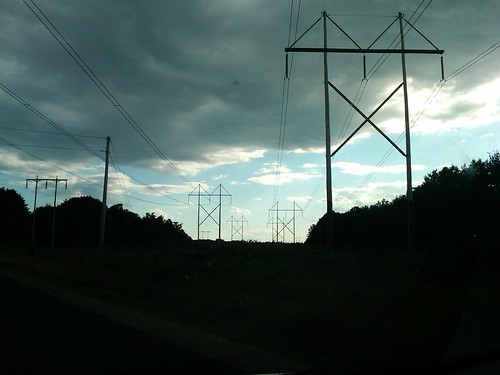
Today's picture: Central Maine Power transmission lines off Route 201 in Topsham, Maine.IMG00307-20100726-1751

In California, the Alta Wind Energy Center — with plans for thousands of acres of turbines to generate electricity for 600,000 Southern California homes — officially broke ground yesterday.  Here's the official project website, which is running a bit slowly today (likely due to all the interest in the project).  Terra-Gen Power, LLC does have a slick website that is worth checking out.  Some highlights include:
  • The Alta Wind Energy Center (AWEC), under developed by Terra-Gen Power, is composed of multiple projects.  The first AWEC development is the Alta-Oak Creek Mojave Project.
  • The Alta-Oak Creek Mojave Project will be composed of up to 320 wind turbine generators and supporting infrastructure.
  • The Project will be developed primarily on privately-owned land adjacent to existing wind energy developments in the Tehachapi area of California.
  • The Project is projected to add 50 full-time jobs to the Kern County economy.
 Interest in smart grid deployment is growing.  Federal policy supports smart grid development, and many states are following suit with more specific provisions.  For example, this spring, the Maine Legislature enacted LD 1535 (now P.L. 2009 Ch. 539).  This bill, sponsored by Representative Jon Hinck of Portland, gives Maine a specific smart-grid policy for the first time.  Both CMP and Bangor Hydro, Maine's largest investor-owned utilities are already rolling out smart meters; the legislative policy declaration builds upon this head start.

In enacting the smart grid bill, the Maine Legislature found that:
  • The cost of electricity to consumers in this State is high in comparison to costs in similar markets and impedes economic development;
  • The State has recognized the consequences of climate change and has committed to policies to reduce emissions of greenhouse gases;
  • The State's electric grid and long-term infrastructure investment are vital to continued security and economic development, and smart grid functions will deliver electricity from suppliers to consumers using modern technology to increase reliability and reduce costs in a way that saves energy and to enable greater consumer choice;
  • The State currently lacks a comprehensive smart grid policy but faces critical decisions regarding the implementation of smart grid functions and associated infrastructure, technology and applications, and the commission and the Legislature will play central roles in making those decisions; and
  • It is vital that a smart grid policy be developed in order to ensure that all ratepayers and the State as a whole are afforded the benefits of smart grid functions and associated infrastructure, technology and applications.
Based on these findings, the Legislature enacted a policy of promoting the development, implementation, availability and use of smart grid functions and associated infrastructure, technology and applications in the State.

With this policy in place, the ball is now in the court of smart grid infrastructure developers.  We now have a law that will support roll-out of smart grid projects in Maine.  Who will be the first to propose one?

A bit of personal news, related to energy: an article I co-authored with a colleague and a client has been published in Paper360 Magazine. Click through to read about how a pulp and paper mill navigates the waters of compliance with the Regional Greenhouse Gas Initiative (RGGI) and other climate change regulation.


How about PACE financing? PACE-promoting provisions got stripped out of the current Senate energy bill. These tweaks are viewed as necessary to let PACE programs flourish, as government-backed lenders Fannie Mae and Freddie Mac have suggested that they won't play with PACE.

July 23, 2010 - no Senate energy bill for now; wind gets boosts

Friday, July 23, 2010

A bit of New Meadows eye candy:
IMG00294-20100722-0833

Sure enough, the Senate climate bill is dead. Instead, we'll get a weak energy bill addressing the BP oil spill in the Gulf of Mexico, promoting building energy efficiency through the HomeStar program, and promoting the use of natural gas as a fuel for large trucks.

In Maine, the Fort Halifax dam removal saga continues. Prior to removal of this dam on the Sebasticook River, the town of Winslow, Maine and residents had voiced concerns about erosion, and had appealed (without success) the Department of Environmental Protection's orders approving dam removal. After the dam was removed, portions of the former impoundment's banks suffered severe erosion. The town had to spend over $725,000 to demolish six homes on Dallaire Street that were threatened by the newly eroded banks. The affected areas also included the river bank below the historic (mid-1700s) Fort Hill Cemetery, eroding the bank back much closer to the cemetery fence and grave sites. Former dam owner FPL Energy Maine Hydro commissioned a study of why this erosion happened. FPLE's study concluded that the dam removal and drawdown "did not play a significant role"; instead, the study pointed to unstable soils, steep slopes, heavy rain, and an earthquake. Both the town and the state expressed doubts about this conclusion. Now the town has officially asked the DEP to perform its own study, and to enforce the conditions in its dam removal order that require FPLE to monitor and remediate erosion.

The U.S. Senate Appropriations Committee has approved Susan Collins's request for $10 million in funding for the University of Maine's development, deployment and testing of deepwater and offshore wind turbines. The funding must now be approved by the full Senate, but the parallel House bill still lacks such an appropriation.

Wind is big in California too. It looks like Terra-Gen's Alta Wind Energy Center near Tehachapi is going forward, as it has placed an order with Vestas Wind Systems for 190 3 MW turbines. The Alta Wind project represents the largest financing of a North American wind-energy development to date. Part of the financial picture includes a 1,550 MW power purchase agreement with Southern California Edison for part of the project output. The project will have domestic economic benefits as well: Vestas will manufacture the blades in Windsor, Colorado, and most of the towers in Pueblo, CO.

A growing storm in the Gulf of Mexico has put BP's efforts at the oil well site on hold.