- The enactment of a portfolio of Maine energy legislation that significant reformed the state's electricity renewable portfolio standard, long-term contracting programs, net energy billing program, and climate policy.
- Increasing public recognition that most of Maine's greenhouse gas emissions arise from the direct combustion of fossil fuels in the transportation and heating sectors, and the need to reduce transportation- and heating-related efforts through "beneficial electrification" or other means.
- Action by the United States to withdraw from the United Nations' Paris Climate Agreement.
- A federal proposal to "reform PURPA" or amend regulations adopted in implementation of a federal law designed to encourage cogeneration and renewable power production.
- Offshore wind procurement processes in Massachusetts and elsewhere.
- Growth in deployment of electric energy storage, following federal regulators' adoption of rules and state legislatures' enactment of incentive programs.
- Federal regulation and enforcement of market manipulation and mandatory reliability standards for the bulk electric system.
- A federal appellate court ruling, Hoopa Valley Tribe v. Federal Energy Regulatory Commission, reshaping a common practice in hydropower licensing by holding that the states and applicants for water quality certifications cannot indefinitely stall federal time limits for state action by repeatedly withdrawing and resubmitting their applications.

Energy powers society; society's choices shape energy policy. A blog about our energy resources and the choices they present for society.
Showing posts with label Paris. Show all posts
Showing posts with label Paris. Show all posts
2019 in review
Tuesday, December 31, 2019
Here's a roundup of some of the items published on this blog in 2019 that have drawn significant interest:

US withdrawal from Paris climate agreement resources
Friday, June 2, 2017
President Donald Trump has announced that the U.S. will withdraw from the Paris climate agreement reached in 2015. Here is a quick roundup of relevant resources.
On December 12, 2015, the Parties to the United Nations Framework Convention on Climate Change adopted Decision 1/CP.21, adopting the Paris Agreement under that convention. The Paris climate accord calls for signatories to limit the increase in the global average temperature to "well below" 2 °C above pre-industrial levels (and to pursue efforts to limit the temperature increase to 1.5 °C above pre-industrial levels), to support adaptation and resilience to climate change's impacts, and to align finance flows with a pathway towards low greenhouse gas emissions and climate-resilient development.
Since its adoption, 195 countries have signed off, including the U.S. President Obama announced U.S. ratification of the Paris agreement in September 2016, along with China. Among members of the U.N. Framework Convention on Climate Change, only Syria and Nicaragua are are not parties to the Paris Agreement.
But President Trump had criticized the deal, and on June 1, 2017, announced that "the United States will withdraw from the Paris Climate Accord... but begin negotiations to reenter either the Paris Accord or a really entirely new transaction on terms that are fair to the United States, its businesses, its workers, its people, its taxpayers."
According to President Trump's statement, "the United States will cease all implementation of the non-binding Paris Accord and the draconian financial and economic burdens the agreement imposes on our country. This includes ending the implementation of the nationally determined contribution and, very importantly, the Green Climate Fund which is costing the United States a vast fortune."
President Trump also addressed the integration of renewable energy sources into the grid, expressing skepticism that renewables could suffice in an era of increased U.S. economic expansion:
On December 12, 2015, the Parties to the United Nations Framework Convention on Climate Change adopted Decision 1/CP.21, adopting the Paris Agreement under that convention. The Paris climate accord calls for signatories to limit the increase in the global average temperature to "well below" 2 °C above pre-industrial levels (and to pursue efforts to limit the temperature increase to 1.5 °C above pre-industrial levels), to support adaptation and resilience to climate change's impacts, and to align finance flows with a pathway towards low greenhouse gas emissions and climate-resilient development.
Since its adoption, 195 countries have signed off, including the U.S. President Obama announced U.S. ratification of the Paris agreement in September 2016, along with China. Among members of the U.N. Framework Convention on Climate Change, only Syria and Nicaragua are are not parties to the Paris Agreement.
But President Trump had criticized the deal, and on June 1, 2017, announced that "the United States will withdraw from the Paris Climate Accord... but begin negotiations to reenter either the Paris Accord or a really entirely new transaction on terms that are fair to the United States, its businesses, its workers, its people, its taxpayers."
According to President Trump's statement, "the United States will cease all implementation of the non-binding Paris Accord and the draconian financial and economic burdens the agreement imposes on our country. This includes ending the implementation of the nationally determined contribution and, very importantly, the Green Climate Fund which is costing the United States a vast fortune."
President Trump also addressed the integration of renewable energy sources into the grid, expressing skepticism that renewables could suffice in an era of increased U.S. economic expansion:
At 1 percent growth, renewable sources of energy can meet some of our domestic demand, but at 3 or 4 percent growth, which I expect, we need all forms of available American energy, or our country ... will be at grave risk of brownouts and blackouts, our businesses will come to a halt in many cases, and the American family will suffer the consequences in the form of lost jobs and a very diminished quality of life.At several times, the President expressed interest in renegotiating the terms of the Paris Agreement or some "new deal":
I’m willing to immediately work with Democratic leaders to either negotiate our way back into Paris, under the terms that are fair to the United States and its workers, or to negotiate a new deal that protects our country and its taxpayers... And we’ll sit down with the Democrats and all of the people that represent either the Paris Accord or something that we can do that's much better than the Paris Accord.A White House press release provided additional information from the administration's perspective. It calls the U.S. "already the world's energy leader," and cites an analysis prepared by NERA for the American Council for Capital Formation and the U.S. Chamber of Commerce's Institute for 21st Century Energy which found that "meeting President Obama’s commitment under the Paris Climate Accord would cost the United States nearly $3 trillion by 2040". The press release notes that under the Paris agreement "the United States would carry the burden while other countries would get the benefits," and that full international compliance with the Paris agreement "would barely impact the climate."
U.S., China ratify Paris climate agreement
Tuesday, September 13, 2016
The U.S. has formally ratified the global climate change agreement reached in Paris last year, as has China. This moves the Paris climate agreement closer to legal effectiveness -- but more nations must accept the pact before it can enter into force.
At issue is the Paris Agreement, an agreement brokered at the 21st Conference of the Parties of the United Nations Framework Convention on Climate Change (UNFCCC). In December 2015, over 190 countries meeting under UNFCCC adopted the Paris Agreement agreement to limit global warming. The Paris Agreement describes climate change as an "urgent threat" and a "common concern of humankind." The agreement's aim is to strengthen global response to this threat, through a variety of means. These include the creation of individual national commitments to reduce greenhouse gas emissions, increased adaptation to climate change, and assistance for developing nations.
But the Paris Agreement has not yet taken its full legal force, because it contains a provision limiting its effectiveness until enough nations agree to comply. As is common for multilateral international agreements, the Paris Agreement calls for parties to express their consent to be bound by the agreement, by depositing instruments of ratification, acceptance, approval or accession with the depositary established by the convention. In this way, the agreement draws a distinction between Parties -- those signing the Agreement -- and those nations which have deposited their ratification instruments.
Under its Article 21, the Paris Agreement "shall enter into force on the thirtieth day after the date on which at least 55 Parties to the Convention accounting in total for at least an estimated 55 percent of the total global greenhouse gas emissions have deposited their instruments of ratification, acceptance, approval or accession." Practically speaking, this means that as new countries submit their ratifications, the convention's secretariat must calculate the total greenhouse gas emissions of Parties that have ratified the Paris Agreement, as a percentage of global greenhouse gas emissions. Once the 55 percent threshold is hit, the Paris Agreement will become legally effective and operational. The UNFCCC has said that while it cannot predict when this will occur, "it is conceivable that the Agreement may enter into force before 2020."
On April 22, 2016, the Paris Agreement was opened for signature. At the opening ceremony, 15 states deposited instruments of ratification. By September 1, reportedly 24 states accounting for just over 1% of global greenhouse gas emissions had ratified the agreement.
The Paris Agreement's path to effectiveness advanced on September 3, when President Obama announced that the U.S. and China had formally joined the Paris agreement in a ceremony in China. In recent years, these nations have been among the world's top emitters of carbon dioxide. As described by the White House, "Both leaders expressed satisfaction with jointly joining the Paris climate agreement and pledged to work together and with other parties to bring the Paris agreement into force as early as possible." The Obama administration also noted other recent U.S. climate actions taken jointly with China, including support for a proposed amendment to the Montreal Protocol to phase down the consumption and production of hydrofluorocarbons (HFCs) globally, and efforts to address international aviation emissions.
Following the U.S.-China announcement, the convention secretariat announced that as of September 7, 27 states had deposited instruments of ratification, acceptance or approval accounting in total for 39.08% of the total global greenhouse gas emissions.
At issue is the Paris Agreement, an agreement brokered at the 21st Conference of the Parties of the United Nations Framework Convention on Climate Change (UNFCCC). In December 2015, over 190 countries meeting under UNFCCC adopted the Paris Agreement agreement to limit global warming. The Paris Agreement describes climate change as an "urgent threat" and a "common concern of humankind." The agreement's aim is to strengthen global response to this threat, through a variety of means. These include the creation of individual national commitments to reduce greenhouse gas emissions, increased adaptation to climate change, and assistance for developing nations.
But the Paris Agreement has not yet taken its full legal force, because it contains a provision limiting its effectiveness until enough nations agree to comply. As is common for multilateral international agreements, the Paris Agreement calls for parties to express their consent to be bound by the agreement, by depositing instruments of ratification, acceptance, approval or accession with the depositary established by the convention. In this way, the agreement draws a distinction between Parties -- those signing the Agreement -- and those nations which have deposited their ratification instruments.
Under its Article 21, the Paris Agreement "shall enter into force on the thirtieth day after the date on which at least 55 Parties to the Convention accounting in total for at least an estimated 55 percent of the total global greenhouse gas emissions have deposited their instruments of ratification, acceptance, approval or accession." Practically speaking, this means that as new countries submit their ratifications, the convention's secretariat must calculate the total greenhouse gas emissions of Parties that have ratified the Paris Agreement, as a percentage of global greenhouse gas emissions. Once the 55 percent threshold is hit, the Paris Agreement will become legally effective and operational. The UNFCCC has said that while it cannot predict when this will occur, "it is conceivable that the Agreement may enter into force before 2020."
On April 22, 2016, the Paris Agreement was opened for signature. At the opening ceremony, 15 states deposited instruments of ratification. By September 1, reportedly 24 states accounting for just over 1% of global greenhouse gas emissions had ratified the agreement.
The Paris Agreement's path to effectiveness advanced on September 3, when President Obama announced that the U.S. and China had formally joined the Paris agreement in a ceremony in China. In recent years, these nations have been among the world's top emitters of carbon dioxide. As described by the White House, "Both leaders expressed satisfaction with jointly joining the Paris climate agreement and pledged to work together and with other parties to bring the Paris agreement into force as early as possible." The Obama administration also noted other recent U.S. climate actions taken jointly with China, including support for a proposed amendment to the Montreal Protocol to phase down the consumption and production of hydrofluorocarbons (HFCs) globally, and efforts to address international aviation emissions.
Following the U.S.-China announcement, the convention secretariat announced that as of September 7, 27 states had deposited instruments of ratification, acceptance or approval accounting in total for 39.08% of the total global greenhouse gas emissions.
U.S., China to sign Paris climate agreement
Tuesday, April 5, 2016
The U.S. and China have announced plans to sign the international climate change agreement reached in Paris last December.
The Paris Agreement, adopted at the "COP21" U.N. Conference on Climate Change, establishes a framework for reducing global greenhouse gas emissions. It takes effect once 55 countries accounting for at least 55% of global emissions formally commit to undertaking the low carbon measures it outlines.
According to a March 31 joint presidential statement on climate change, over the past 3 years, "climate change has become a pillar of the U.S.-China bilateral relationship." The statement notes domestic efforts by the U.S. and China to "build green, low-carbon and climate-resilient economies", as well as the international action culminating in the December 2015 conference decision to adopt the Paris Agreement.
The joint statement declares that U.S. and China "will sign the Paris Agreement on April 22nd and take their respective domestic steps in order to join the Agreement as early as possible this year." April 22 represents the first day that the Paris Agreement will be formally open for signature by adopting nations.
A White House blog post describes this step as a "critical milestone" because it represents a commitment by "the world's two largest polluters" who account for 40% of global emissions. According to that blog, this commitment places the 55% threshold for implementation "well within reach," "demonstrating to the international community that there is no turning back on the path towards a low carbon future."
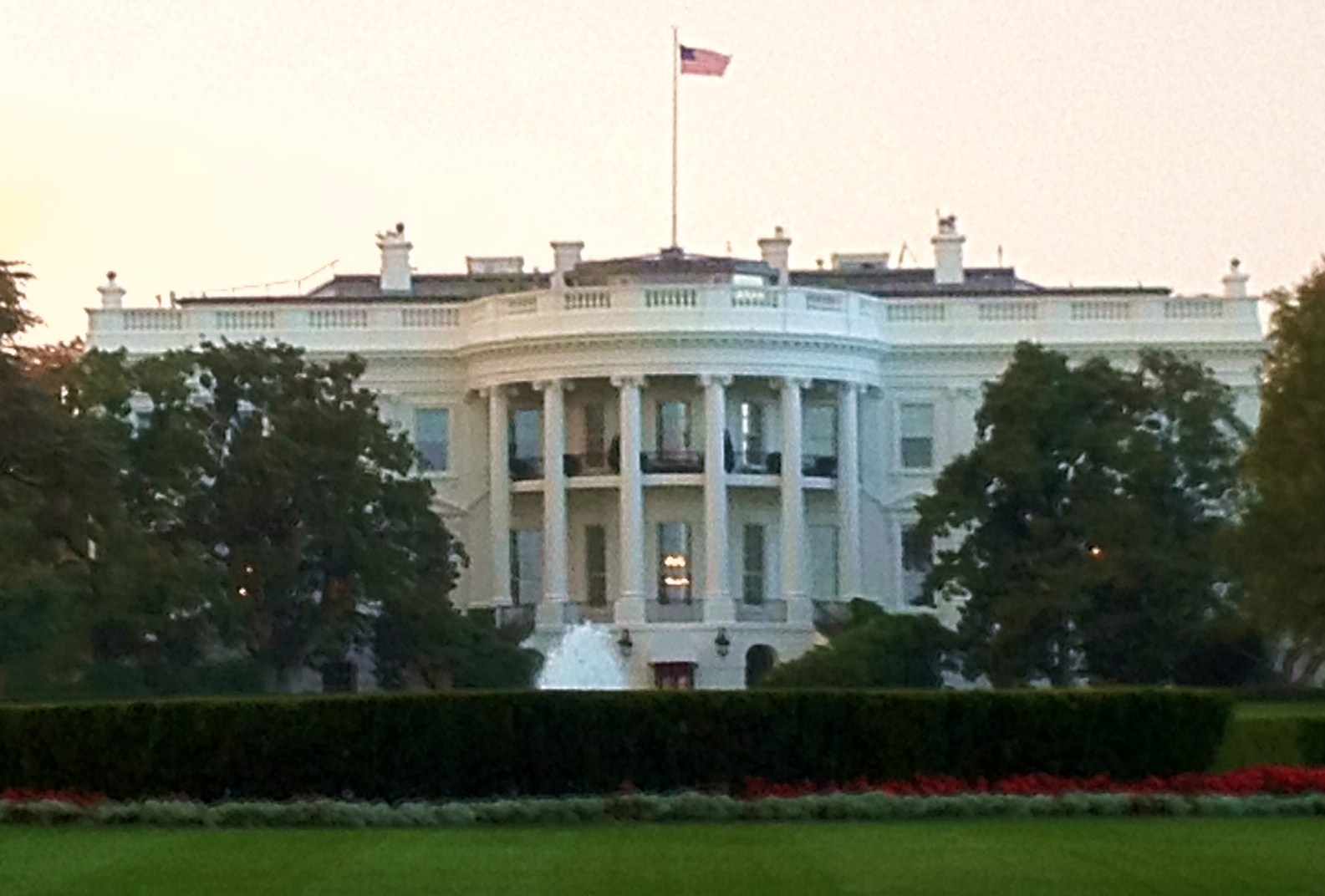 |
| The White House. |
The Paris Agreement, adopted at the "COP21" U.N. Conference on Climate Change, establishes a framework for reducing global greenhouse gas emissions. It takes effect once 55 countries accounting for at least 55% of global emissions formally commit to undertaking the low carbon measures it outlines.
According to a March 31 joint presidential statement on climate change, over the past 3 years, "climate change has become a pillar of the U.S.-China bilateral relationship." The statement notes domestic efforts by the U.S. and China to "build green, low-carbon and climate-resilient economies", as well as the international action culminating in the December 2015 conference decision to adopt the Paris Agreement.
The joint statement declares that U.S. and China "will sign the Paris Agreement on April 22nd and take their respective domestic steps in order to join the Agreement as early as possible this year." April 22 represents the first day that the Paris Agreement will be formally open for signature by adopting nations.
A White House blog post describes this step as a "critical milestone" because it represents a commitment by "the world's two largest polluters" who account for 40% of global emissions. According to that blog, this commitment places the 55% threshold for implementation "well within reach," "demonstrating to the international community that there is no turning back on the path towards a low carbon future."
Paris climate agreement walkthrough
Tuesday, December 15, 2015
On December 12, the Parties to the United Nations Framework Convention on Climate Change adopted Decision 1/CP.21, adopting the Paris Agreement under that convention. The Paris Agreement itself is 12 pages long, and includes a preamble and 29 articles. Its details merit a close read, as parties spent countless hours negotiating every word and piece of punctuation in the document. Some articles have many operative clauses and address topics like temperature change and greenhouse gas emissions, while other articles are more ministerial. Billions of dollars, and maybe the fate of the world, rests on the terms of these legal documents and how they are implemented.
Here's a overview-level walkthrough of the Paris Agreement:
Here's a overview-level walkthrough of the Paris Agreement:
- Preamble: recognizes climate change as a "common concern of humankind" and an "urgent threat" to which an "effective and progressive response" is necessary, that least developed countries and others may have specific needs, and interactions with other social values like food security, decent work and quality jobs, and "the importance for some of the concept of 'climate justice'".
- Article 1 provides definitions for Convention, Conference of the Parties, and Party.
- Article 2 defines the Agreement's aim as "to strengthen the global response to the threat of climate change, in the context of sustainable development and efforts to eradicate poverty," including a long-term temperature goal, a call for increased adaptation, and "making finance flows consistent with a pathway towards low greenhouse gas emissions and climate-resilient development."
- Article 3 requires all parties "to undertake and communicate ambitious efforts as defined in Articles 4, 7, 8, 10, 11, and 13" as "nationally determined contributions to the global response to climate change."
- Article 4 addresses the long-term temperature goal established in Article 2. It requires each party to "prepare, communicate and maintain successive nationally determined contributions that it intends to achieve" and to pursue domestic mitigation measures. Parties are expected to increase the level of ambition reflected in their nationally determined contributions over time. Developed country parties are expected to take the lead, while supporting developing country parties and small island developing states.
- Article 5 calls for conservation and enhancement of sinks and reservoirs of greenhouse gases, including forests.
- Article 6 recognizes that some parties may choose to pursue voluntary cooperation in implementing their nationally determined contributions. It establishes a mechanism to promote and track "internationally transferred mitigation outcomes." It also defines a framework to promote non-market approaches.
- Article 7 establishes a global goal of enhancing adaptive capacity, strengthening resilience and reducing vulnerability to climate change. It requires parties to engage in adaptation planning processes and actions. It also requires periodic "adaptation communication" reporting to the secretariat.
- Article 8 addresses averting, minimizing, and dealing with "loss and damage" associated with the adverse effects of climate change, "including extreme weather events and slow onset events." It uses the Warsaw International Mechanism for Loss and Damage associated with Climate Change Impacts as its basis.
- Article 9 calls for developed country parties to provide financial resources to assist developing country parties with respect to both mitigation and adaptation, and to take the lead in "mobilizing climate finance from a wide variety of sources, instruments, and channels."
- Article 10 promotes technology development and transfer to "improve resilience to climate change and to reduce greenhouse gas emissions."
- Article 11 calls for "capacity-building", to enhance the capacity and ability of developing country and vulnerable parties to take effective climate change action such as adaptation and mitigation.
- Article 12 requires cooperation on "climate change education, training, public awareness, public participation and public access to information."
- Article 13 creates an "enhanced transparency framework for action and support" to build trust and confidence while allowing flexible and effective implementation. It requires each party to regularly provide a "national inventory report of anthropogenic emissions by sources and removals by sinks of greenhouse gases," and information on how it has provided financial, technology transfer and capacity-building support to other countries.
- Article 14 requires a "global stocktake" -- that the parties periodically "take stock of the implementation of this Agreement to assess the collective progress towards achieving the purpose of this Agreement and its long-term goals." Article 14 provides that the Conference of the Parties shall undertake its first global stocktake in 2023 and every five years thereafter unless the Conference otherwise decides.
- Article 15 establishes an expert-based committee as "a mechanism to facilitate implementation of and promote compliance with" the Paris Agreement.
- Article 16 provides procedures for aligning future meetings of parties to the Paris Agreement with the meetings of the Conference of the Parties.
- Articles 17, 18, and 19 provide procedures for the Convention secretariat, Subsidiary Body for Scientific and Technological Advice and Subsidiary Body for Implementation established by the Convention to also apply to the Paris Agreement.
- Article 20 provides processes for signature, ratification, acceptance, approval and accession of the Paris Agreement.
- Article 21 provides that the Paris Agreement "shall enter into force on the thirtieth day after the date on which at least 55 Parties to the Convention accounting in total for at least an estimated 55 percent of the total global greenhouse gas emissions have deposited their instruments of ratification, acceptance, approval or accession."
- Articles 22 and 23 provide processes for adopting any amendments or annexes to the Paris Agreement.
- Article 24 governs dispute resolution.
- Article 25 provides that each party shall have one vote, and establishes a process for "regional economic integration organizations" to vote as a bloc.
- Article 26 provides that the Secretary-General of the United Nations shall be the Depositary of the Paris Agreement.
- Article 27 prohibits any reservations being made to the Agreement.
- Article 28 provides a process for a party to withdraw from the Paris Agreement.
- Article 29 governs the original of the Paris Agreement.
Guide to the Paris climate agreement decision
Representatives from 195 countries signed a climate agreement on Saturday at the COP21 United Nations climate summit in Paris. The resulting Paris climate agreement calls upon both developed and developing
nations to reduce emissions of greenhouse gases, and establishes a framework for reviewing progress every five years. This post examines the formal decision to adopt the Paris Agreement taken by the 21st Conference of the Parties to the United Nations Framework Convention on Climate Change (UNFCCC).
Under the procedural rules governing the Conference of the Parties, the parties adopted "decision 1/CP.21", the draft of which was proposed by the President of the Conference of the Parties. Decision 1/CP.21 formally adopts the Paris Agreement -- contained in an annex to the decision -- and creates processes supporting its implementation.
Decision 1/CP.21 emerges from the parliamentary procedures used by the U.N. and the Conference of the Parties. Written in formal language, the draft decision includes a preamble and six active sections:
Under the procedural rules governing the Conference of the Parties, the parties adopted "decision 1/CP.21", the draft of which was proposed by the President of the Conference of the Parties. Decision 1/CP.21 formally adopts the Paris Agreement -- contained in an annex to the decision -- and creates processes supporting its implementation.
Decision 1/CP.21 emerges from the parliamentary procedures used by the U.N. and the Conference of the Parties. Written in formal language, the draft decision includes a preamble and six active sections:
- The preamble recites the agreed-upon facts motivating the Paris agreement, such as, "climate change represents an urgent and potentially irreversible threat to human societies and the planet and thus requires the widest possible cooperation by all countries."
- Section I, "Adoption," formally adopts the Paris Agreement under the United Nations Framework Convention on Climate Change as contained in the annex, and establish the Ad Hoc Working Group on the Paris Agreement to facilitate its implementation.
- Section II, "Intended Nationally Determined Contributions," invites participating countries to submit "intended nationally determined contributions" towards achieving the objective of the Convention "as soon as possible and well in advance of the twenty-second session of the Conference of the Parties (November 2016)."
- Section III, "Decisions to Give Effect to the Agreement," includes sections covering mitigation, adaptation, loss and damage, finance, technology development and transfer, capacity-building, transparency of action and support, global stocktake, facilitating implementation and compliance.
- Section IV, "Enhanced Action prior to 2020," calls for "the highest possible mitigation efforts in the pre-2020 period," such as "the provision of urgent and adequate finance, technology and capacity-building support by developed country Parties in order to enhance the level of ambition of pre-2020 action by Parties," with a goal of jointly providing USD 100 billion annually by 2020 for mitigation and adaptation.
- Section V, "Non-Party Stakeholders," welcomes interest, participation, and parallel efforts by non-Party Stakeholders, such as "civil society, the private sector, financial institutions, cities and other subnational authorities."
- Section VI, "Administrative and Budgetary Matters," notes potential limits on available financial resources, and urges that parties voluntarily make additional resources available.
US auctions NJ offshore wind sites
Tuesday, November 10, 2015
The U.S. Department of the Interior has auctioned the rights to lease nearly 344,000 acres offshore New Jersey for potential offshore wind energy development.
Under federal law, the Department of the Interior's Bureau of Ocean Energy Management is responsible for leasing marine sites on the Outer Continental Shelf for energy development. In addition to BOEM's oil and gas site leasing programs, the agency also operates renewable energy programs focused primarily on offshore wind and hydrokinetic resources (waves and currents). Prior to yesterday's lease sale, BOEM had awarded nine commercial offshore wind leases offshore Massachusetts, Maryland, Rhode Island, and Virginia.
In September, BOEM announced that it would auction off the rights to two designated Wind Energy Areas offshore New Jersey. That auction was held yesterday. According to BOEM, the provisional winner of lease area OCS-A 0498 (160,480 acres) was RES America Developments Inc., with a bid of $880,715. US Wind Inc. provisionally won site OCS-A 0499 (183,353 acres), with a bid of $1,006,240. Fishermen’s Energy LLC also reportedly participated in the lease sale but did not win either parcel.
Generally centered offshore of Atlantic City, the New Jersey Wind Energy Area starts about 7 nautical miles offshore and runs about 21 nautical miles seaward. The U.S. Department of Energy’s National Renewable Energy Laboratory reports that full development of the area could support about 3,400 megawatts of wind generation.
Since the Obama administration's early "Smart from the Start" program, BOEM has engaged in efforts to spur offshore wind development. President Obama's June 2013 Climate Change Action Plan features offshore wind as a tool to reduce the emission of carbon dioxide and other greenhouse gases from domestic industry.
This emphasis on the linkage between offshore wind and action on climate change is increasingly clear in the administration's messaging. Early press releases on BOEM's offshore wind programs emphasized "the Obama Administration's all-of-the-above energy strategy to continue to expand domestic energy production." By July 31, 2013, in announcing the first ever competitive lease sale for renewable energy in federal waters, BOEM described "President Obama's comprehensive plan to move our economy toward domestic clean energy sources and cut carbon pollution." Just two months later in September 2013, after the release of the Climate Action Plan, BOEM began using the phrase "President Obama's Climate Action Plan to create American jobs, develop domestic clean energy sources and cut carbon pollution." BOEM continues to use this phrase in touting its offshore wind program's consistency with the Climate Action Plan, as recently as yesterday's press release about the New Jersey lease sale.
Perhaps more tellingly, the Department of Interior press release announcing yesterday's New Jersey sale references "COP21", the upcoming 2015 Paris Climate Conference, in its brief summary. This reference to the Paris climate convention is not otherwise explained in the text of the press release. Nevertheless its inclusion here highlights the interplay between domestic and international energy policy, as well as the potential role U.S. offshore wind might play in addressing climate change.
Under federal law, the Department of the Interior's Bureau of Ocean Energy Management is responsible for leasing marine sites on the Outer Continental Shelf for energy development. In addition to BOEM's oil and gas site leasing programs, the agency also operates renewable energy programs focused primarily on offshore wind and hydrokinetic resources (waves and currents). Prior to yesterday's lease sale, BOEM had awarded nine commercial offshore wind leases offshore Massachusetts, Maryland, Rhode Island, and Virginia.
In September, BOEM announced that it would auction off the rights to two designated Wind Energy Areas offshore New Jersey. That auction was held yesterday. According to BOEM, the provisional winner of lease area OCS-A 0498 (160,480 acres) was RES America Developments Inc., with a bid of $880,715. US Wind Inc. provisionally won site OCS-A 0499 (183,353 acres), with a bid of $1,006,240. Fishermen’s Energy LLC also reportedly participated in the lease sale but did not win either parcel.
Generally centered offshore of Atlantic City, the New Jersey Wind Energy Area starts about 7 nautical miles offshore and runs about 21 nautical miles seaward. The U.S. Department of Energy’s National Renewable Energy Laboratory reports that full development of the area could support about 3,400 megawatts of wind generation.
Since the Obama administration's early "Smart from the Start" program, BOEM has engaged in efforts to spur offshore wind development. President Obama's June 2013 Climate Change Action Plan features offshore wind as a tool to reduce the emission of carbon dioxide and other greenhouse gases from domestic industry.
This emphasis on the linkage between offshore wind and action on climate change is increasingly clear in the administration's messaging. Early press releases on BOEM's offshore wind programs emphasized "the Obama Administration's all-of-the-above energy strategy to continue to expand domestic energy production." By July 31, 2013, in announcing the first ever competitive lease sale for renewable energy in federal waters, BOEM described "President Obama's comprehensive plan to move our economy toward domestic clean energy sources and cut carbon pollution." Just two months later in September 2013, after the release of the Climate Action Plan, BOEM began using the phrase "President Obama's Climate Action Plan to create American jobs, develop domestic clean energy sources and cut carbon pollution." BOEM continues to use this phrase in touting its offshore wind program's consistency with the Climate Action Plan, as recently as yesterday's press release about the New Jersey lease sale.
Perhaps more tellingly, the Department of Interior press release announcing yesterday's New Jersey sale references "COP21", the upcoming 2015 Paris Climate Conference, in its brief summary. This reference to the Paris climate convention is not otherwise explained in the text of the press release. Nevertheless its inclusion here highlights the interplay between domestic and international energy policy, as well as the potential role U.S. offshore wind might play in addressing climate change.
Subscribe to:
Posts (Atom)
